Commercial HVAC Preventive Maintenance That Makes Your Portfolio Predictable
A rooftop unit rarely fails without warning.
Often, you'll discover that no one was paying attention when the warning signs appeared.
If you manage commercial properties, you have likely lived through some version of the same story. A lease renewal is underway. A tenant calls with comfort complaints. A rooftop unit fails during peak season. Ownership asks why replacement was not planned six months ago.
Now the repair bill is only part of the problem.
You are managing tenant expectations, explaining budget variances, updating ownership, and trying to regain control of a situation that should never have become an emergency.
That is why commercial HVAC preventive maintenance matters.
Not because maintenance itself is exciting. Because predictability is.
Facing new Washington CBPS reporting requirements? Hoover conducts private compliance and HVAC/R asset-readiness workshops for PNW commercial real estate teams.
Get a clear picture of equipment condition, emerging risks, and capital priorities before another failure sets the agenda.
What usually triggers a search for HVAC preventive maintenance?
Most property managers do not go looking for a new maintenance partner after everything goes right.
Usually, one of these events starts the search:
- A rooftop unit fails during a lease negotiation.
- An emergency repair disrupts the annual maintenance budget.
- Ownership requests a five-year capital plan nobody can produce.
- A building engineer retires and takes years of equipment knowledge with them.
- Compliance requirements demand records that do not exist.
- Recurring comfort complaints put a tenant relationship at risk.
- A vendor keeps reporting that everything looks good until a major component fails.
Different situations. Same root problem.
The building has become reactive. Reactive buildings are harder to budget, harder to explain, and harder to grow around.
Why do so many maintenance programs fail?
Many maintenance contracts are built around visits, not outcomes.
A technician arrives. A filter gets changed. A form gets signed. A service ticket gets closed.
Nothing meaningful is trended. Nothing is forecasted. Nothing helps ownership make the next decision.
That is not preventive maintenance. It is maintenance theater.
ANSWER
A real maintenance program creates visibility. If your contractor cannot show equipment condition, performance trends, deficiencies, priorities, and future risks, you are buying activity instead of insight.
The purpose of maintenance is not keeping technicians busy. The purpose is helping you prevent the next budget ambush.
What does O&M Commercial HVAC preventive maintenance include?
Every commercial building depends on systems most people never see. Your maintenance program should make those systems visible.
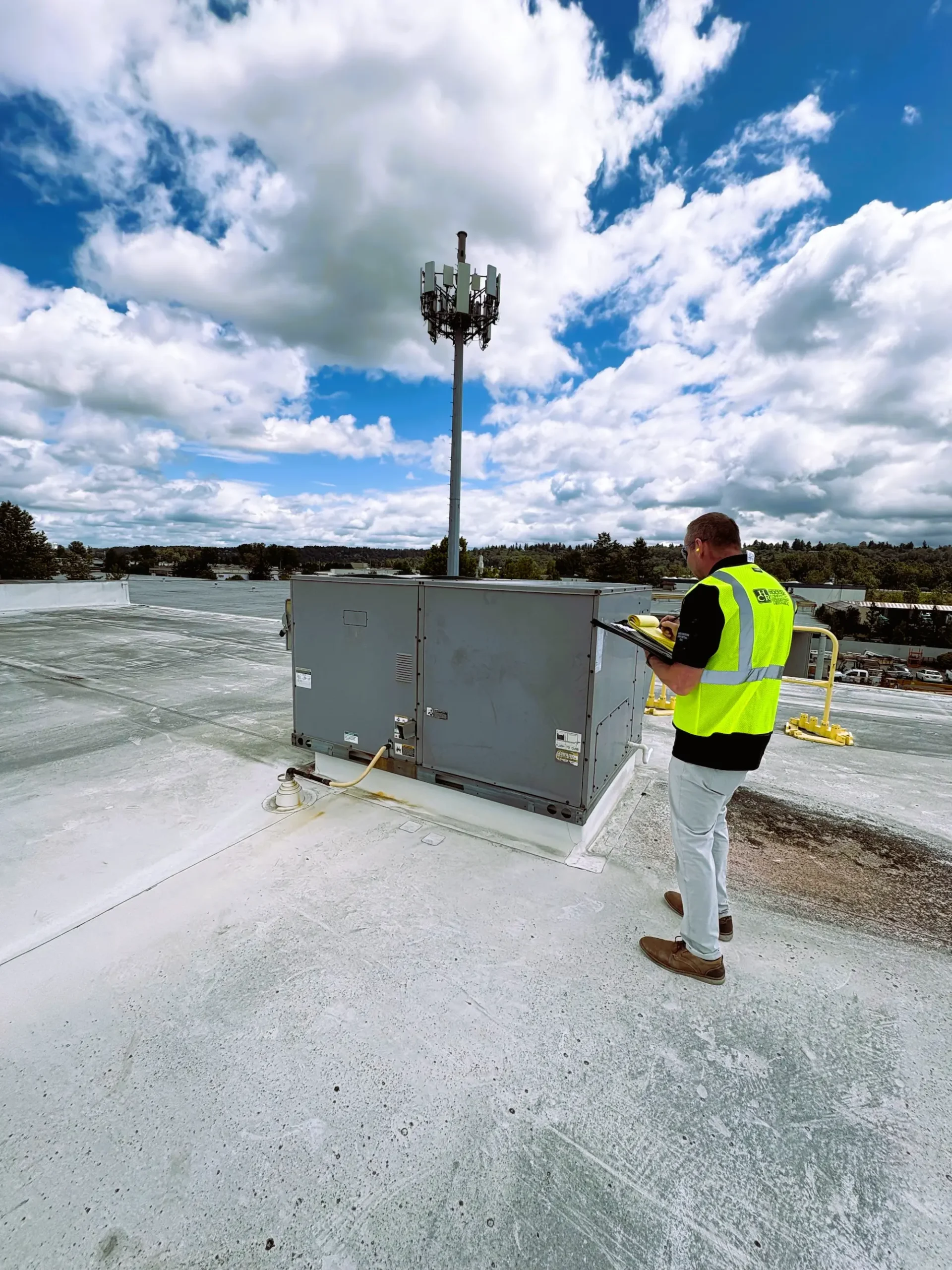
A complete visit includes operational verification, performance testing, cleaning, adjustment, documentation, and forward-looking recommendations.
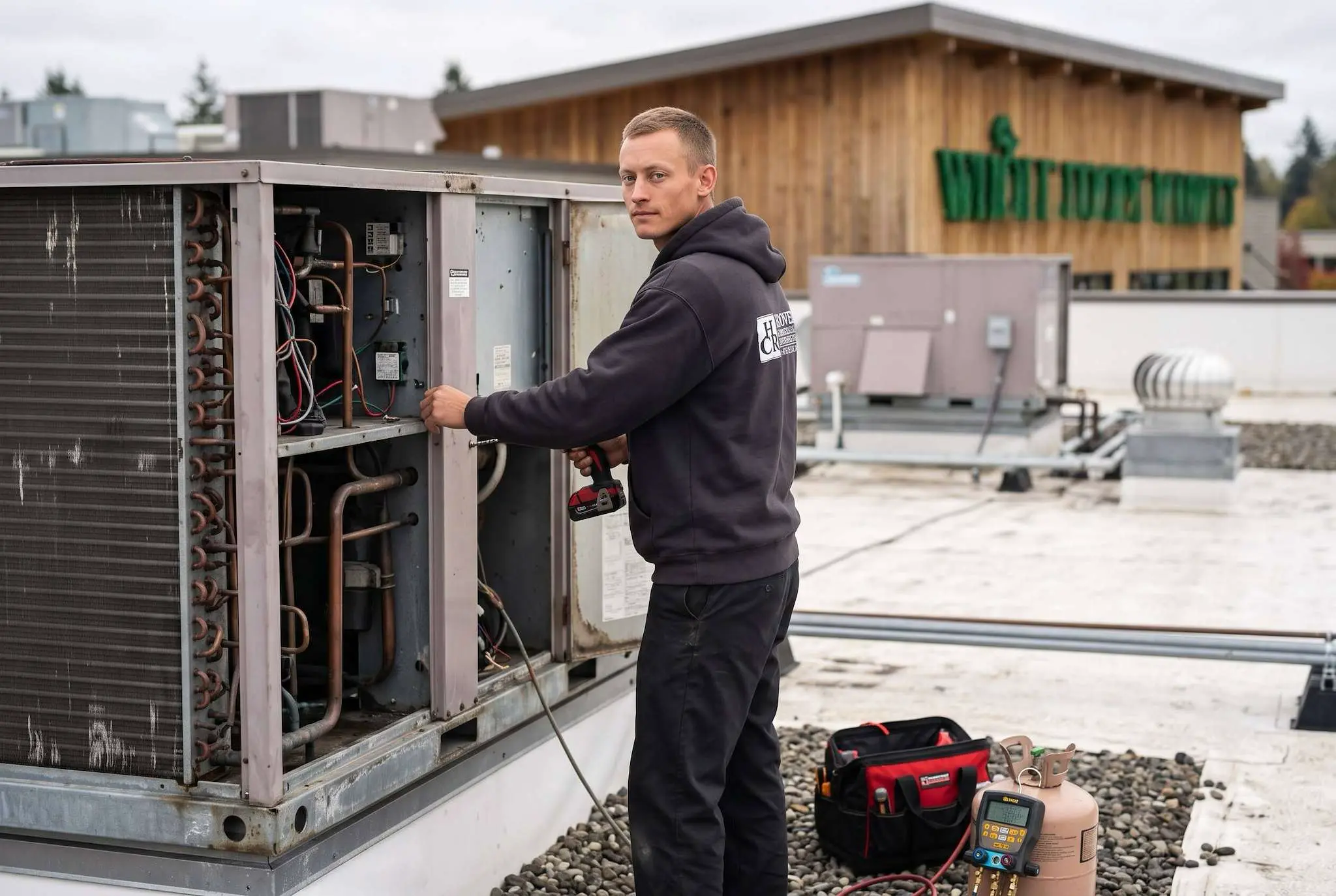
Cooling season inspections
- Refrigerant pressure & performance trends
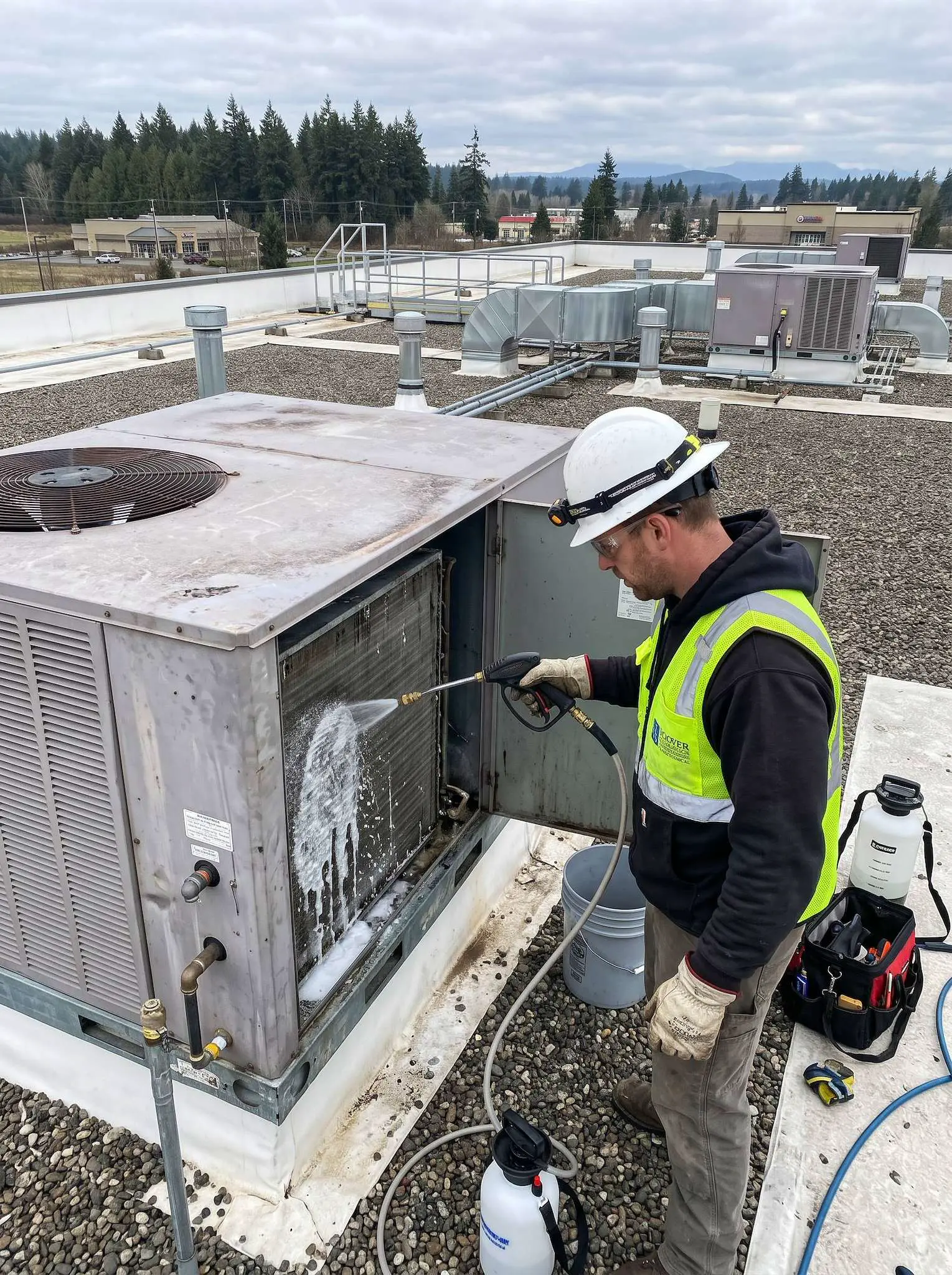
- Evaporator and condenser coil cleaning
- Electrical connections & contactor check
- Compressor operation & capacitor testing
- Airflow balance and static pressure read
- Thermostat calibration and setpoints
Heating season inspections
- Heat exchanger safety and integrity check
- Burner condition & combustion analysis
- Gas valve testing and igniter verification
- Flue passage and exhaust venting check
- Belt tension, pulley wear, and bearings
- Safety control limits and lockout tests
Year-Round & Facility Baseline
- Filter condition and MERV rating review
- Drain pan cleaning and condensate flow
- Economizer damper setup and testing
- Control sequence and schedule checks
- Disconnect switch and panel inspections
- Motor vibration and fan balance checks
The inspection matters. The documentation matters even more.
If ownership asked for a five-year mechanical plan tomorrow, could you produce it?
Ownership does not want emergency capital requests. Ownership wants visibility and options.
You need to know:
- Which assets are operating normally
- Which assets need closer monitoring
- Which repairs should be scheduled now
- Which units belong in next year’s capital plan
- Which equipment can remain in service
- Which replacement decisions are affected by refrigerant transitions, energy standards, or other regulatory requirements
Turn maintenance data into capital decisions. Usable reporting gives ownership a clear basis for prioritizing repairs, planning replacements, and reducing dependence on disconnected work orders and costly 24/7 emergency response.
ANSWER
For Directors and VPs of Property Management, a documented maintenance program is the operating foundation for portfolio-level capital control. It establishes asset history, replacement timelines, service records, condition trends, and energy baselines—giving ownership defensible priorities across buildings. Without those records, capital planning is reactive guesswork. With them, it becomes disciplined, portfolio-wide forecasting.
What is the unspoken number behind reactive maintenance?
Consider two similar buildings: same age, similar tenants, comparable rooftop equipment.
Five years later, their mechanical costs look nothing alike.
One property follows a documented O&M maintenance strategy for its HVAC systems. The other treated maintenance as a line item to shrink rather than an asset to protect.
A seasoned regional or property manager already knows the difference. The cheapest maintenance quote protects this quarter's budget. It does not protect the investor's asset, the equipment's service life, or the building's long-term value. Trading real inspection and documentation for a lower invoice does not save money—it defers the cost, with interest, to a future replacement, emergency call, or capital shortfall.
The reactive property pays for:
- Emergency labor premiums (Journeyman Level Techs on overtime is $400 2hr minuim
- Expedited equipment purchases
- Tenant disruption and repeat comfort calls
- Unplanned management time
- Repairs made without a long-term equipment plan
- Earlier replacement caused by unresolved operating problems
The proactive property pays for inspection, scheduled repairs, planning, and visibility.
The difference is what gets noticed early.
The honest caveat is simple: maintenance cannot prevent every failure. Equipment still ages, motors still burn out, and components still reach the end of their service life. The value is knowing more, sooner, so replacement and repair decisions are made deliberately instead of under pressure.
How does documentation protect a property manager?
Buildings change hands. Ownership groups change. Facility teams retire. Inspectors arrive. Insurance claims happen.
That is when documentation stops being paperwork and becomes protection.
The question eventually comes: “Do we have maintenance records?”
You should be able to answer it without searching through old emails, calling a former engineer, or hoping the last vendor kept the file.
How does preventive maintenance support compliance?
Many compliance problems begin as documentation problems.
ANSWER
The simplest compliance strategy is continuous documentation. A disciplined O&M program creates many of the records that ownership groups, auditors, inspectors, and compliance partners will eventually request.
Depending on the building and equipment, those records may include:
- Equipment service histories
- Filter and MERV-rating records
- Refrigerant service documentation
- Combustion analysis reports
- Economizer test records
- Ventilation and control verification
- Energy-use baselines and O&M records
That ongoing record can support work related to Washington Clean Buildings requirements, EPA refrigerant rules, the A2L transition, ASHRAE 62.1 ventilation expectations, and local building-performance programs.
Hoover supports the mechanical work and O&M documentation. For formal benchmarking, filings, or legal interpretations, you should work with the appropriate qualified compliance or energy professional.


Why do commercial real estate teams choose Hoover?
Most mechanical contractors talk about equipment.
You are measured by outcomes: tenant satisfaction, budget control, owner confidence, portfolio performance, lease retention, and operational predictability.
That is where the relationship should start.
Hoover brings:
- Union-trained journeymen who understand commercial systems
- A structured seasonal assessment approach.
- Detailed reporting that records what was checked, found, completed, and observed
- Commercial HVAC and refrigeration support under one relationship
- Fluency in the mechanical implications of Washington energy and refrigerant requirements
- A leadership culture built around catching the quiet failure before it becomes the loud emergency
This service is not designed for owners seeking the cheapest filter-change contract or a once-a-year signature. It is built for property teams that want a consistent contractor, useful communication, defensible records, and enough visibility to plan ahead.
What is the difference between a contractor and a mechanical partner?
That distinction matters when your portfolio grows. The right partner makes a large mechanical portfolio feel smaller, clearer, and more manageable.
How does the process work?
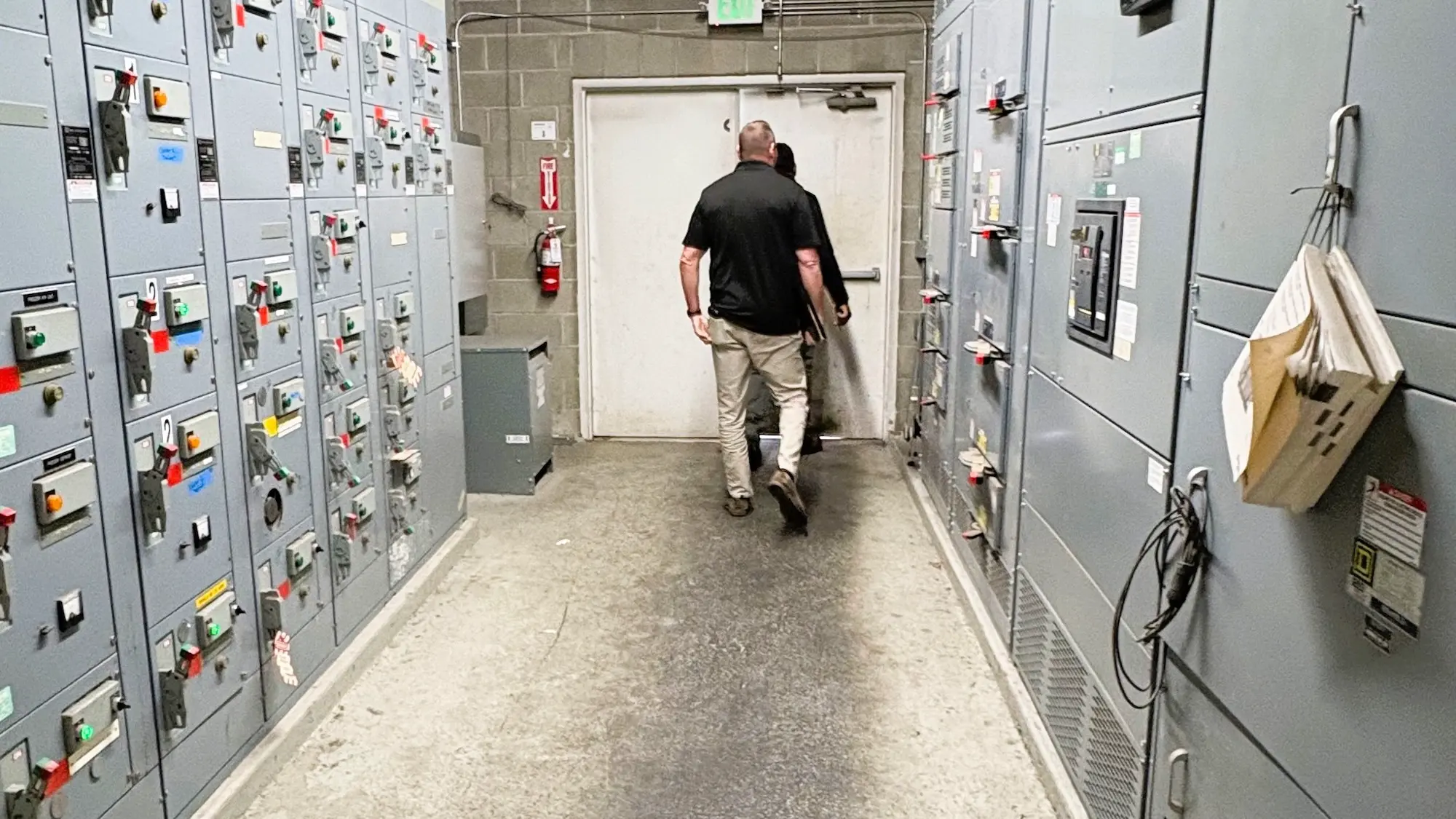
1. Walk the building
We document the equipment, identify visible risks, review available history, and understand how the property operates.
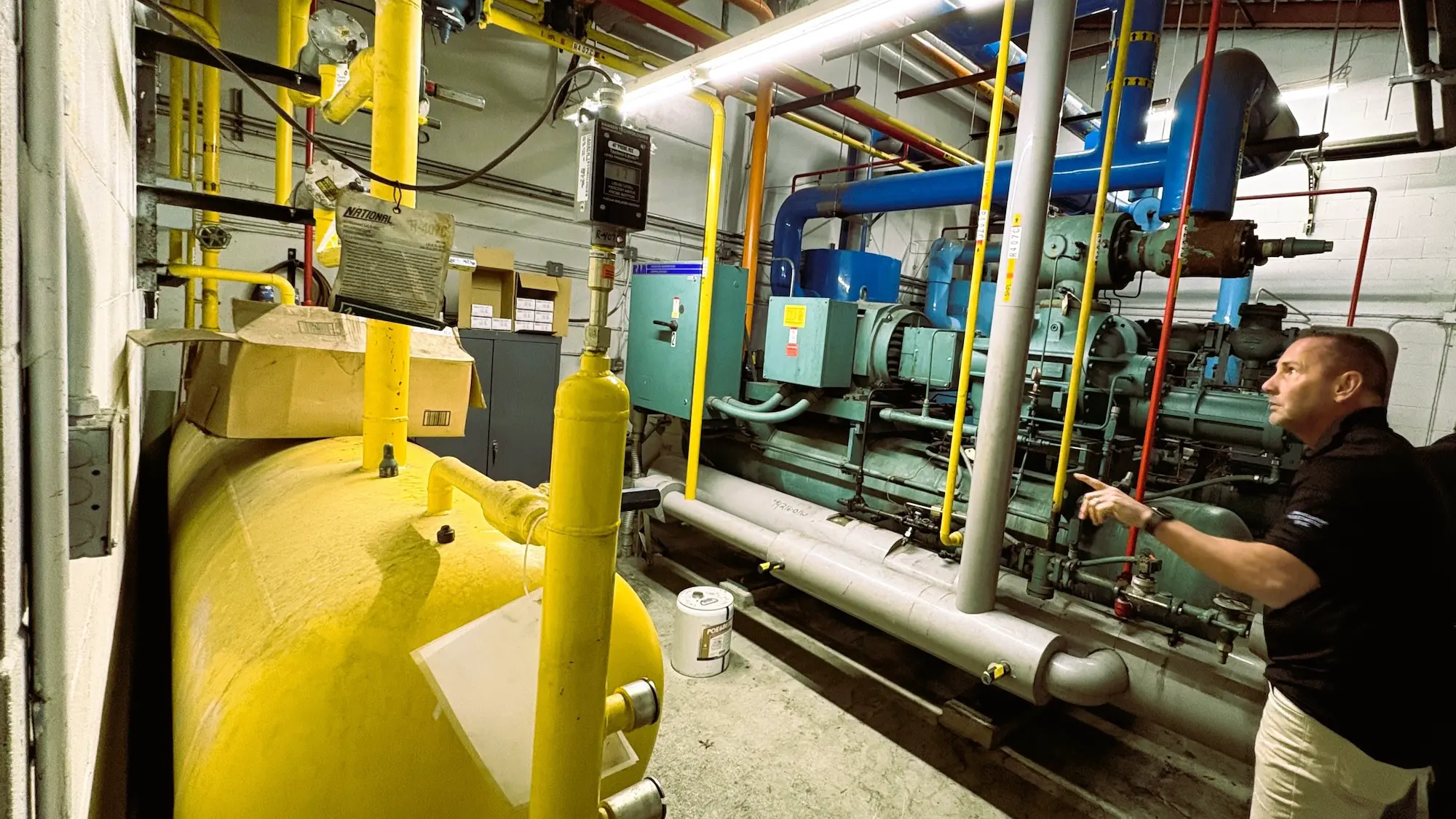
2. Get the plan and the number
You receive clear findings, priorities, recommendations, and budget visibility.
3. Stop thinking about it.
You return to managing tenants, ownership expectations, and portfolio growth while the mechanical plan stays visible and moving.
What does success look like?
The building performs on paper as well as it does in the field.
You have fewer surprise calls, fewer unplanned capital conversations, and a maintenance history you can hand to an owner, engineer, auditor, or future manager without rebuilding the story from memory.
You know which equipment is healthy. You know what needs attention. You know what belongs in the replacement schedule.
The portfolio keeps growing without the mechanical workload feeling larger every month.
That is the point of a documented O&M maintenance program.
Stop managing surprises
Your tenants expect comfort. Ownership expects predictability. Regulators expect documentation. A maintenance program should support all three. Request a complimentary building assessment and get a clearer view of equipment condition, emerging risk, missing records, and future capital needs.