
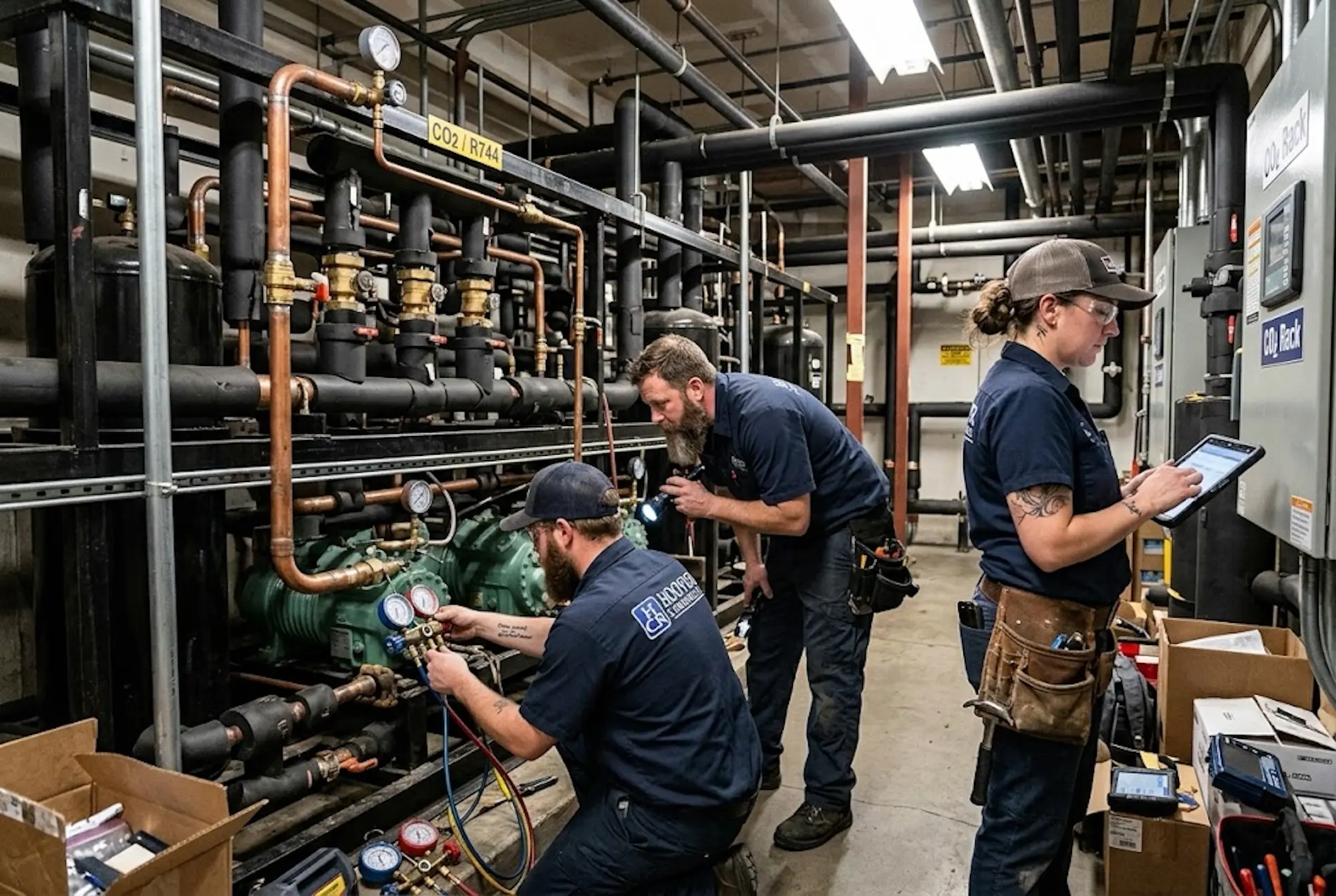
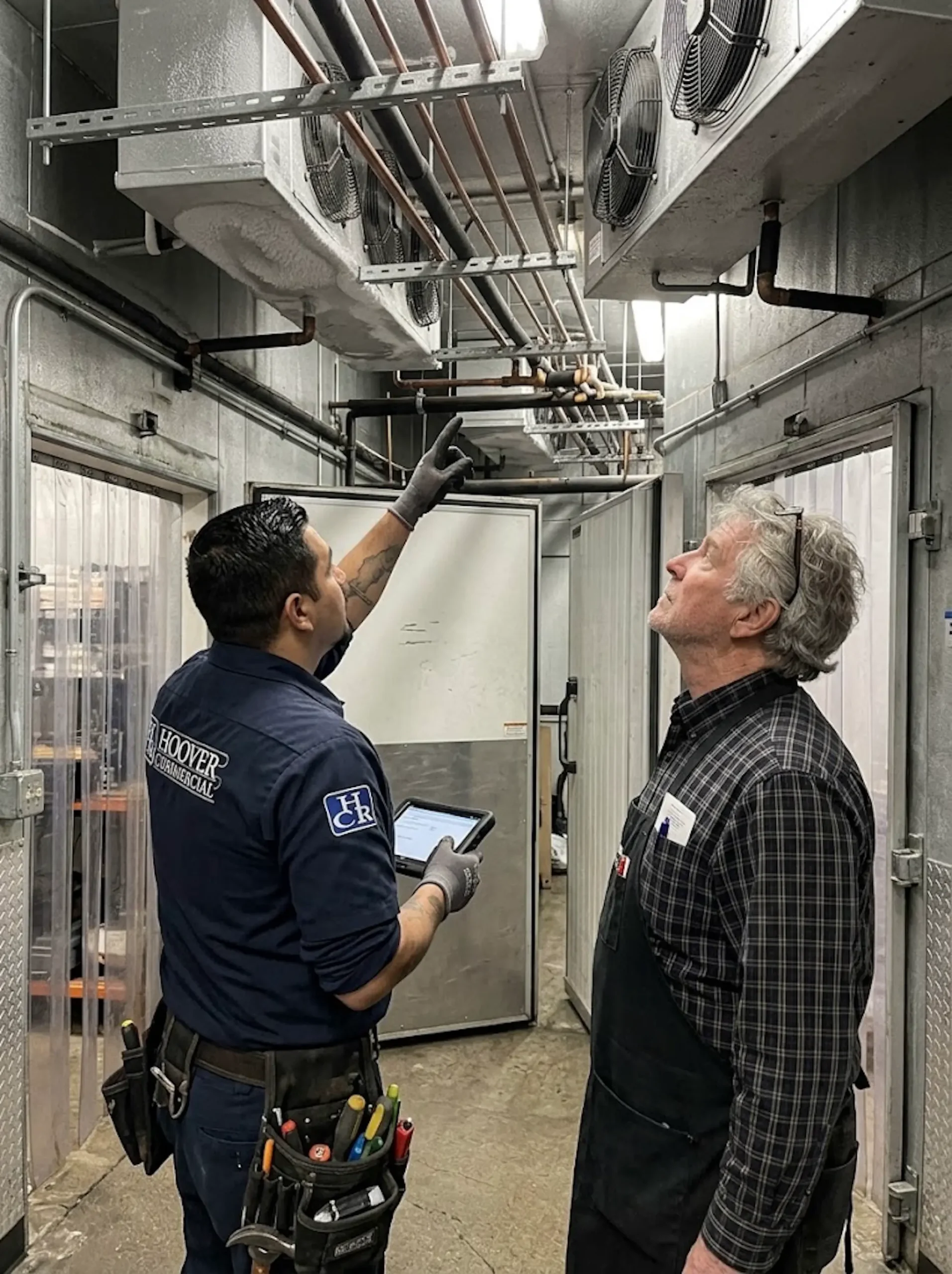
Who Fixes the Walk-In?
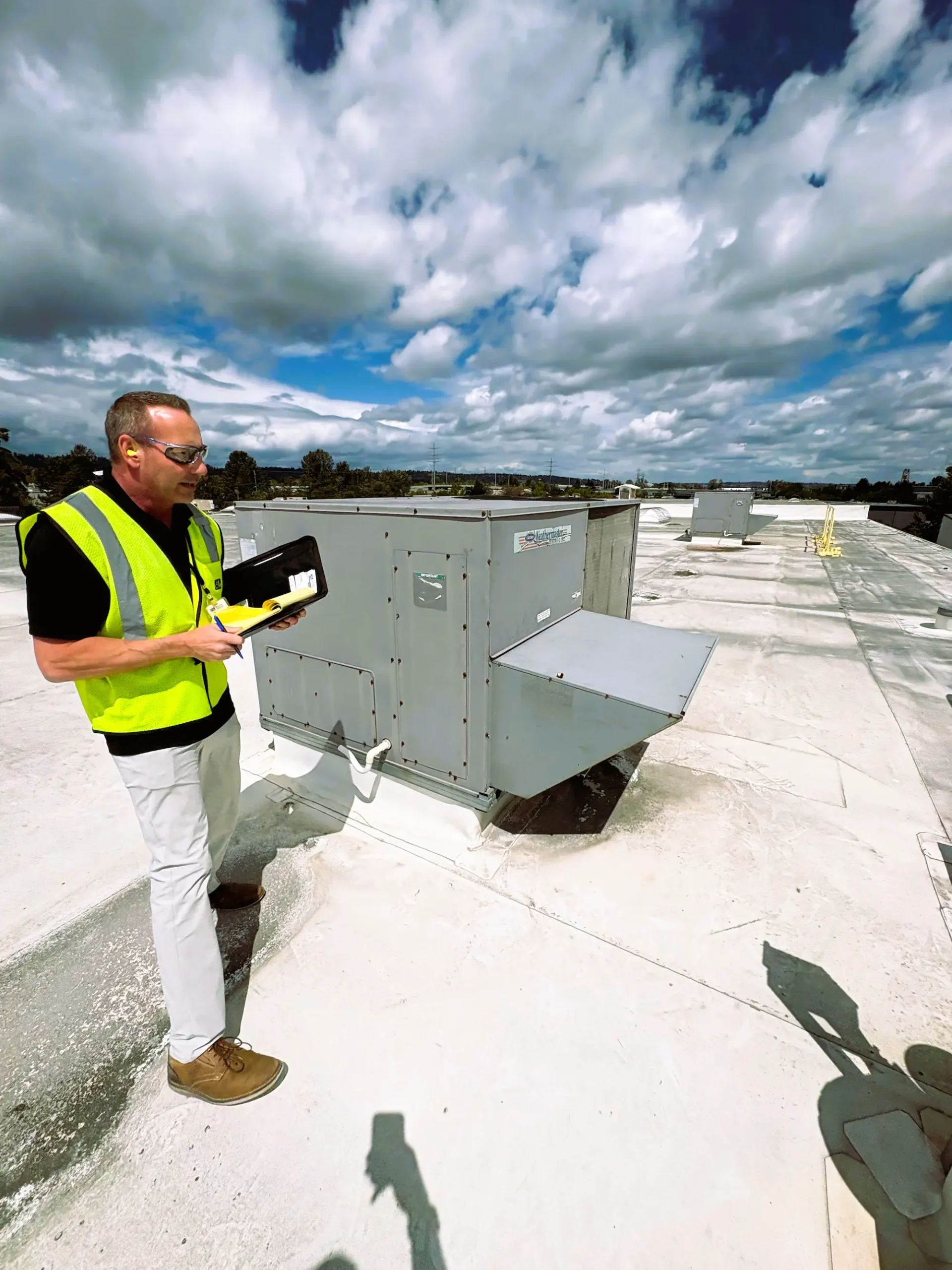
Who Walks the Roof?
Two specialized departments. One shop.
If you manage a retail grocery chain, school, commercial property, campus or production facility, you already know the drill. The cooler is warming up. A classroom is uncomfortable. A rooftop unit is making a noise nobody likes. Now you have to decide which contractor to call, explain the building twice, coordinate access twice and hope the problem stays neatly inside one trade.
Buildings rarely cooperate with that plan.
Comfort HVAC and commercial refrigeration may be different disciplines, but they operate inside the same facility, affect the same people and land on the same budget. Hoover brings both specialties together under one brand, one service relationship and one shared expectation: understand the whole operating environment, communicate clearly and make the next step easier.
Two specialized departments. One shop. One Mission.
Separate expertise without the vendor shuffle
Let’s be clear: HVAC and refrigeration are not the same job. They require different experience, different troubleshooting habits and different technical depth. That is why Hoover maintains distinct teams for each discipline.
Our HVAC department focuses on the systems that heat, cool, ventilate and control your building. Our refrigeration department focuses on the equipment that protects temperature, product and process. Each team knows its craft. The advantage is that they work inside the same company rather than leaving you to referee two unrelated vendors.
When a situation touches both sides of the facility, the handoff stays inside Hoover. Your call does not become a scavenger hunt. Your problem does not get bounced back with “that belongs to the other contractor.” The specialists can coordinate, share useful history, and keep the customer at the center of the response.
Your building does not care which department owns the problem
Picture a school campus. The rooftop units support classrooms, offices, kitchens, and common areas. Downstairs, walk-in coolers, freezers, ice machines and prep equipment support food service. When the facility team plans maintenance, responds to a complaint or prepares a capital budget, all of that equipment belongs to one operating reality.
The same is true in food processing. Refrigeration protects ingredients, finished product and production temperature. HVAC manages ventilation, comfort, humidity, makeup air, and the conditions around the process. One side protects the cold chain. The other helps the facility and the people inside it perform. The jobs are distinct, but the business consequences are shared.
That is the practical meaning of dual capability: not pretending everything is one system, but making sure the customer is not left standing between two service companies when systems, schedules or symptoms overlap.
The roof crew and the cold-side crew, on the same side
Less explaining. Less chasing. More clarity.
Two-vendor service can create a quiet administrative burden. You open separate work orders. You schedule separate access. You collect separate reports. You compare separate recommendations. If the first diagnosis does not solve the problem, you may spend the next round asking who should return.
A coordinated relationship changes the experience. You have one company to call, one place to start and one brand responsible for communication. The right department still performs the work. You simply do not have to rebuild the service process every time a different piece of equipment needs attention.
The value is not that one technician does everything.
The value is that one company takes responsibility for getting the right expertise involved.
Serious maintenance leaves a trail
A filter change and a signature are not a maintenance strategy. Useful service should tell you what was checked, what was found, what was completed and what deserves attention next.
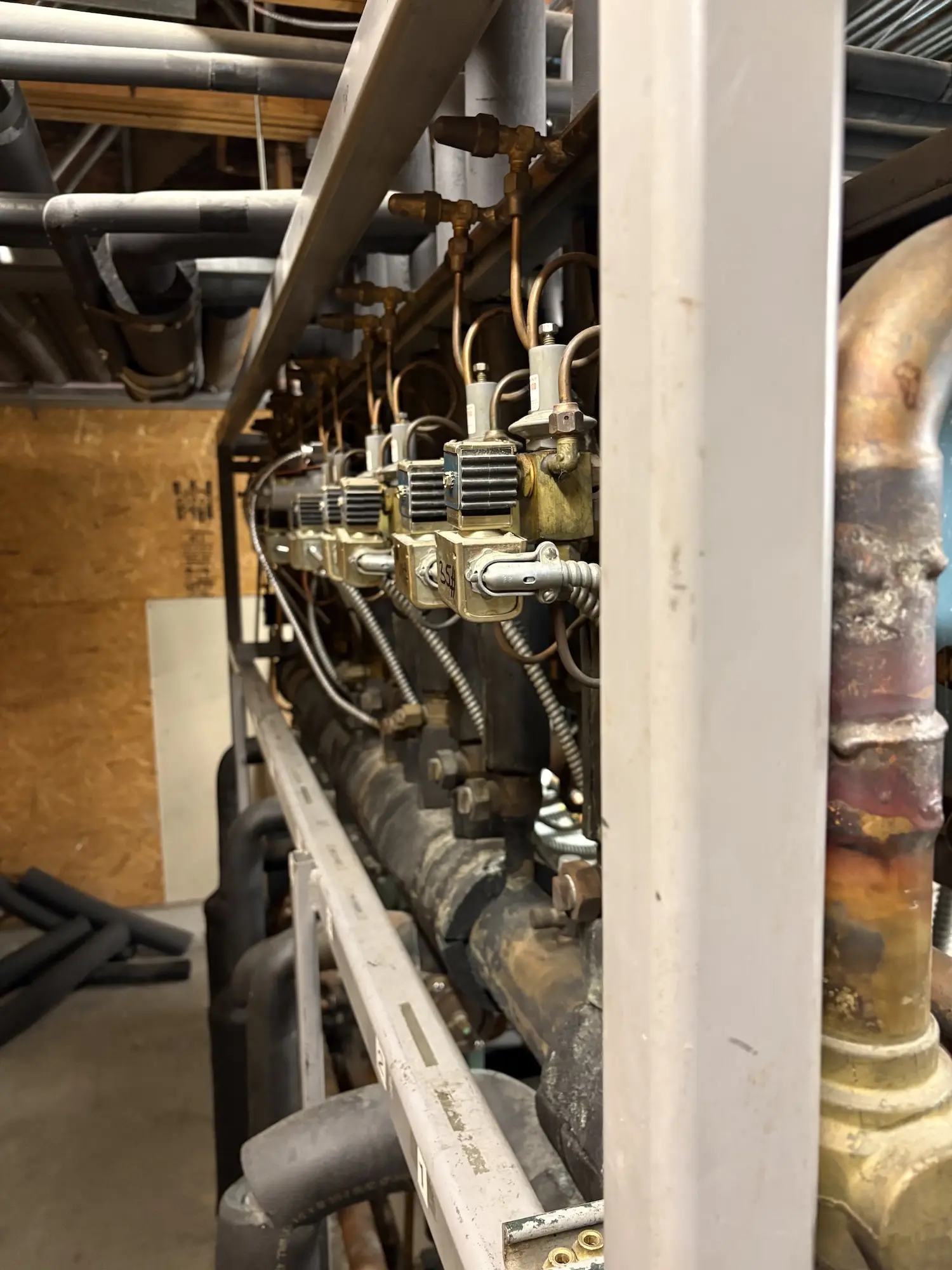
Across HVAC and refrigeration, that means paying attention to the technical signals that reveal drift before a failure becomes obvious: temperature and pressure changes, coil condition, electrical wear, airflow, controls, drains, vibration, defrost operation, refrigerant activity and other equipment-specific readings. The exact checklist changes by asset. The discipline does not.
Clear reporting gives facility teams something valuable: a usable history. It supports budget conversations, capital planning, internal communication, warranty questions and compliance work. It also means the next technician does not have to rediscover the building from zero.
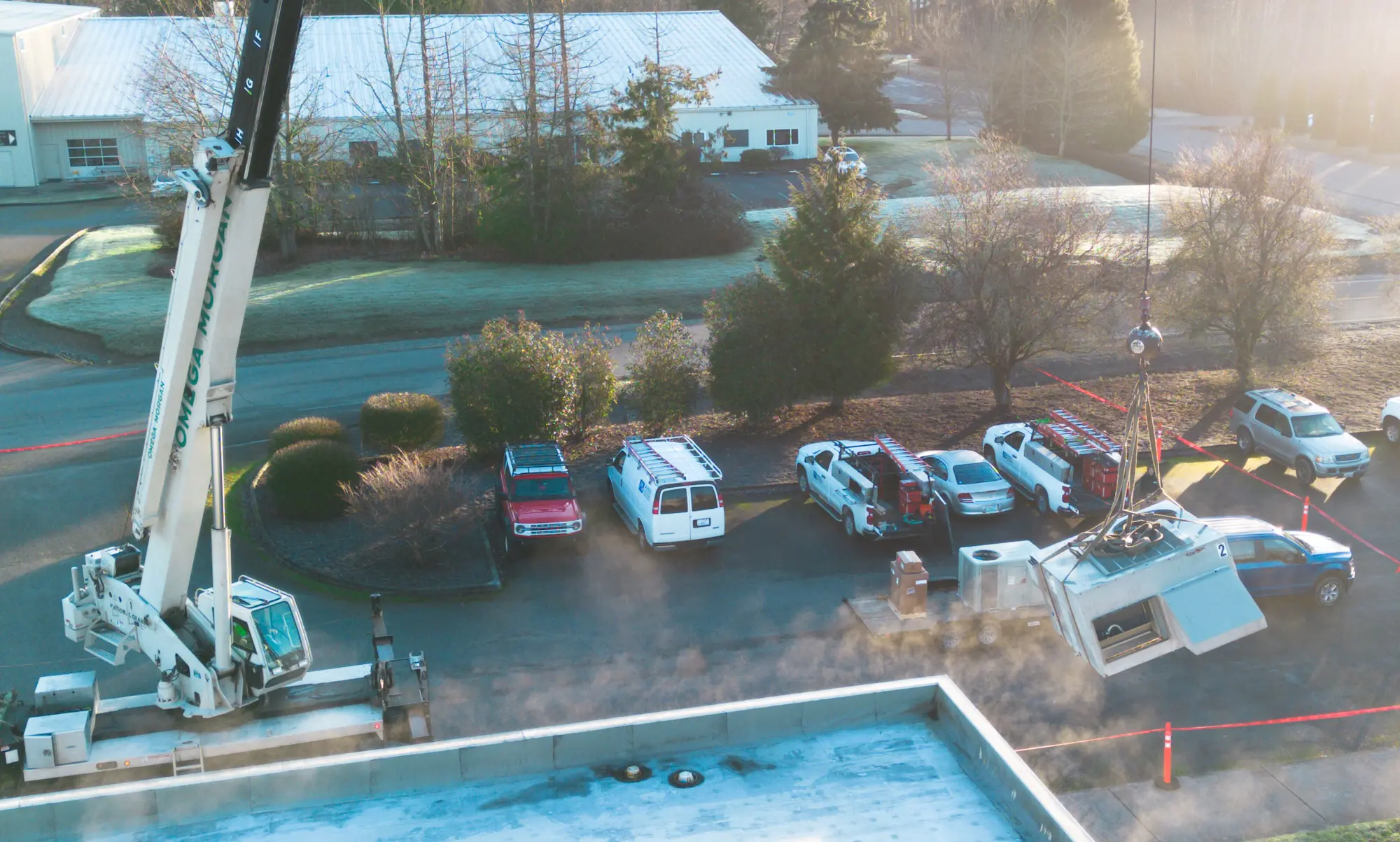
Built for facilities where failure is a business problem
This model is designed for commercial environments where comfort, temperature and continuity matter. The audience may change, but the stakes are familiar:
- Retail grocery chains and supermarkets across the Pacific Northwest keeping cooling racks and walk-ins at temperature,
protecting perishable inventory and maintaining documentation. - Food processors and cold-storage operators protecting product, process temperature and audit-ready records.
- Schools and campuses managing classrooms, kitchens, occupied spaces and public budgets.
- Property teams balancing tenant comfort, service history, operating costs and multiple buildings.
- Manufacturers coordinating facility HVAC, ventilation and process cooling around production.
- Healthcare and institutional facilities where reliable systems and clear documentation support daily operations.
If your facility has both a roof and a walk-in, both systems deserve specialists. Your team should not have to become the switchboard between them.
Support that starts with questions, not a sales pitch
Trust starts when a contractor is willing to understand the building. What equipment do you actually have? Which systems are critical? Where have calls been repeating? What records exist? Which problems belong in maintenance, which need repair and which should be part of a future capital plan?
Those questions lead to a service plan built around your operation rather than a generic list of tasks. They also make it easier to decide whether combining HVAC and refrigeration under one relationship will reduce risk, simplify communication and improve visibility.
What coordinated service looks like in practice
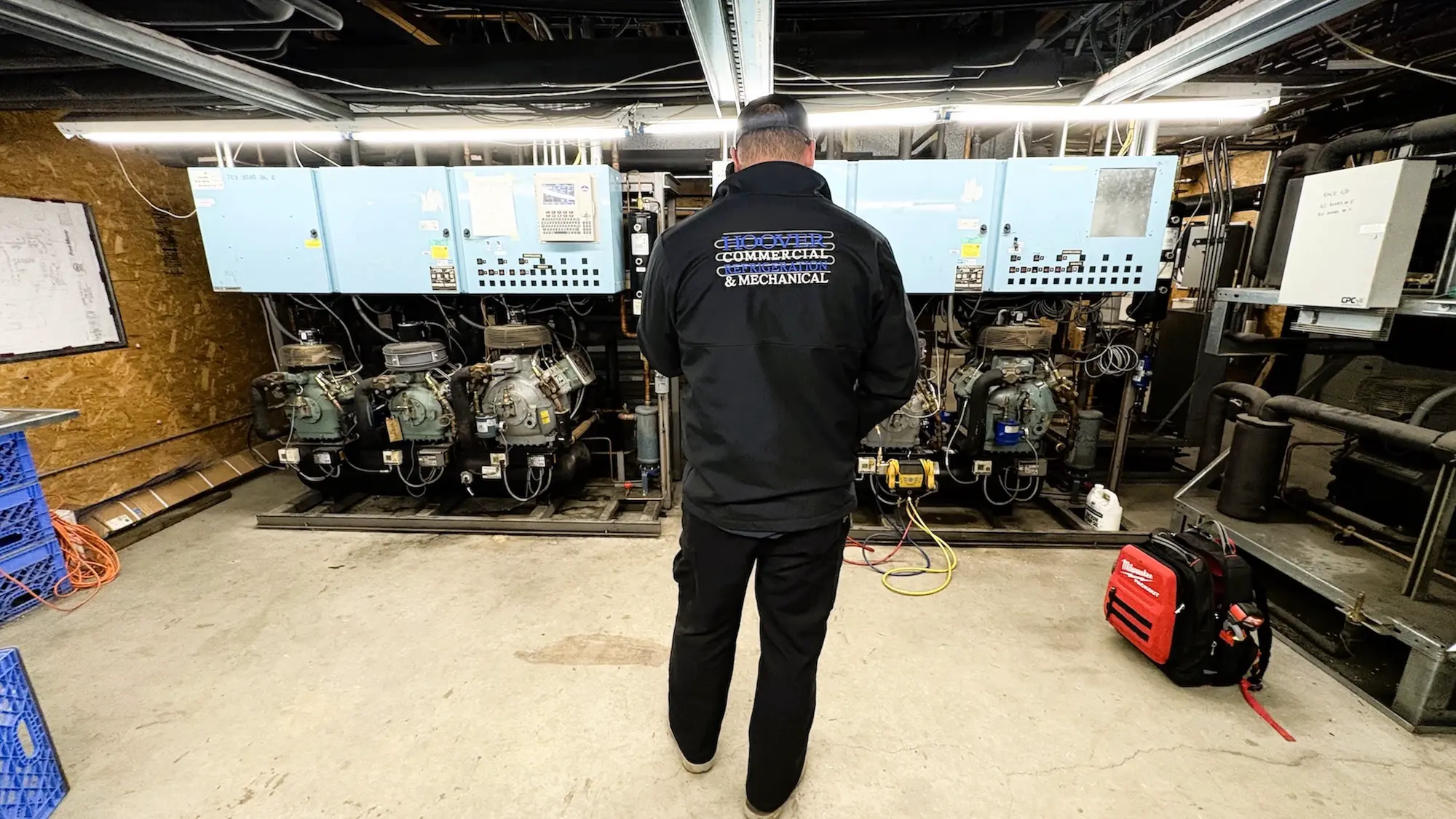
It starts with one equipment picture. During onboarding, the facility is organized by asset, location, operating role and service need. The rooftop unit serving a classroom wing is not treated like the walk-in protecting the kitchen, but both belong in the same facility conversation. That makes it easier to understand coverage, priorities and access before the next service call arrives.
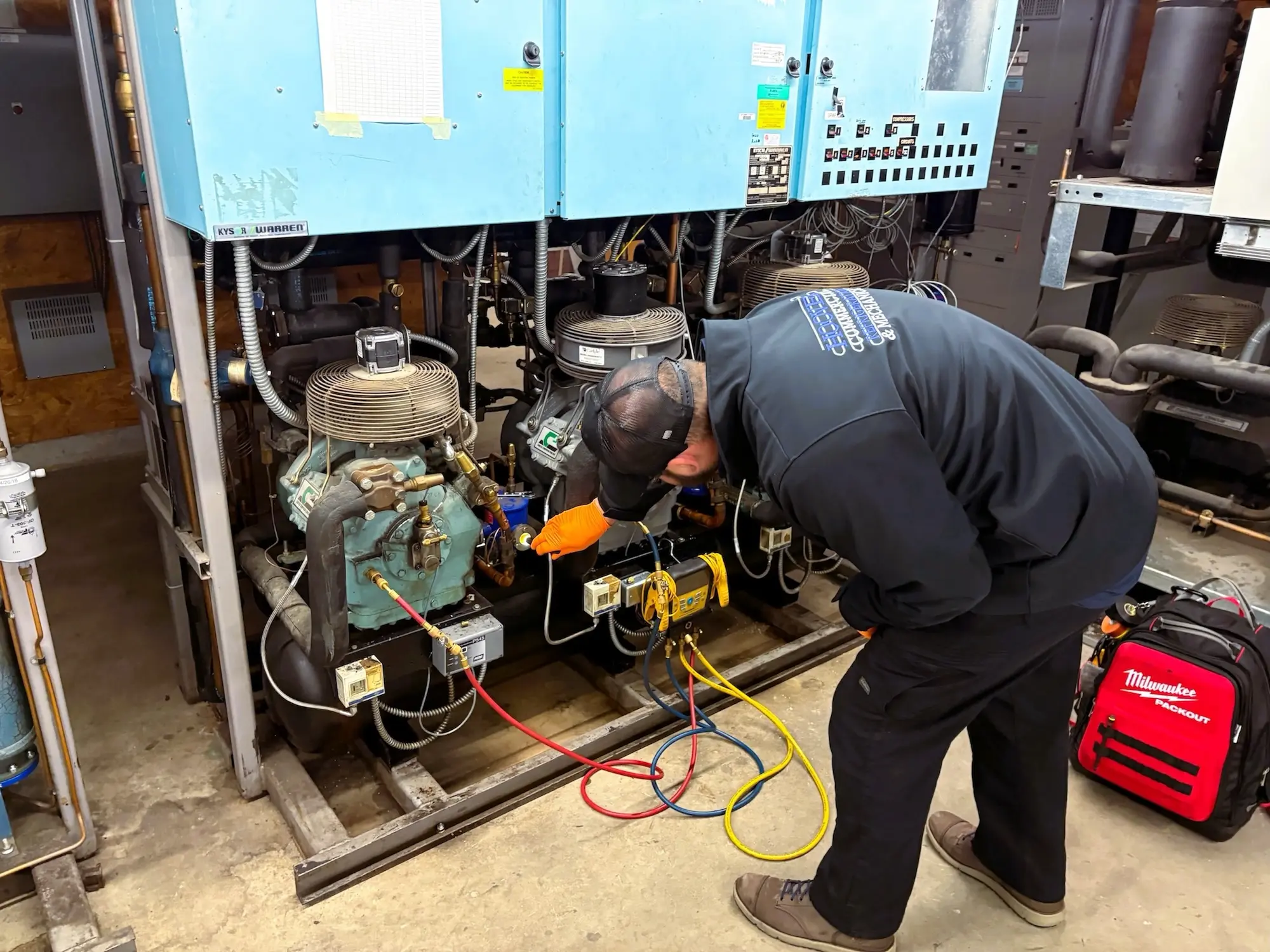
From there, work is routed to the department equipped for it. HVAC concerns go to HVAC specialists. Refrigeration concerns go to refrigeration specialists. When the symptoms overlap or the first call reveals a broader condition, coordination happens inside the company. You receive a clear explanation of what each team found and how the recommendations fit together.
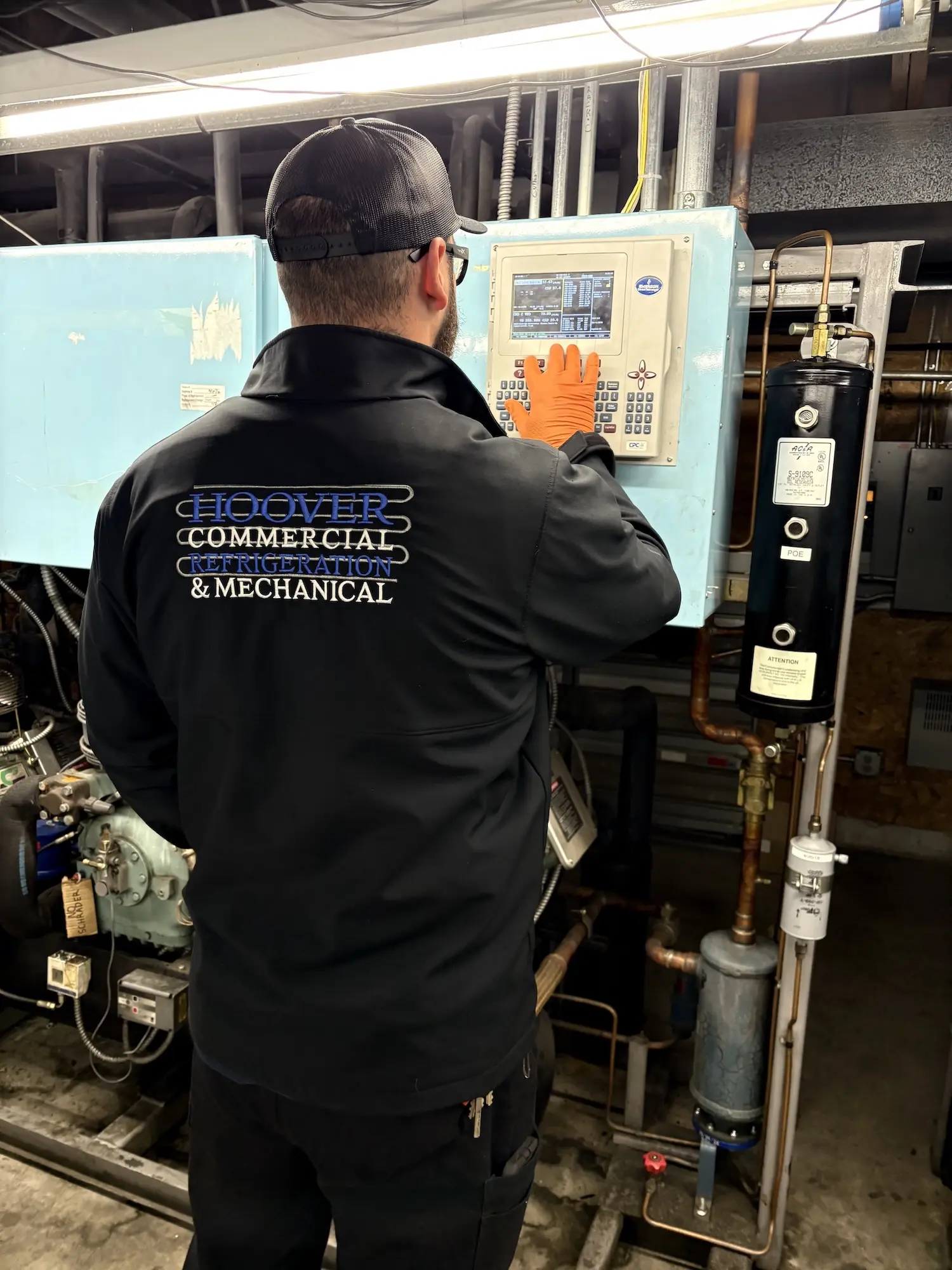
Finally, the history stays useful. Maintenance findings, repairs, recurring conditions and future recommendations should help your team answer practical questions: What changed? What needs attention? What can wait? What belongs in next year’s budget? A good record reduces repeat explanation and gives managers a clearer basis for decisions.
No superhero claims. Just a smarter service model.
Dual capability is not magic, and it is not a promise that every problem has one simple cause. It is a better way to organize commercial service. Instead of asking your staff to diagnose the trade before making a call, you start with the operating problem. Instead of making two companies collaborate from the outside, you work with one company that already knows how to bring the right department into the conversation.
That difference matters most on the busy days, when the building is occupied, production is moving, the kitchen is operating and nobody has spare time for contractor ping-pong.
One company to call. Two departments ready to help.
Hoover does not blur the line between HVAC and refrigeration. We make the line easier for our customers to cross.
You get specialized people for specialized equipment, backed by one commercial organization that understands the building, keeps the conversation moving and helps you see what comes next. From the rooftop unit to the walk-in freezer, from tenant comfort to product protection, the work stays connected because your operation is connected.
Request a Facility Walkthrough
Let’s review your HVAC and refrigeration assets together, identify gaps between the systems and build a clear next step for your facility.