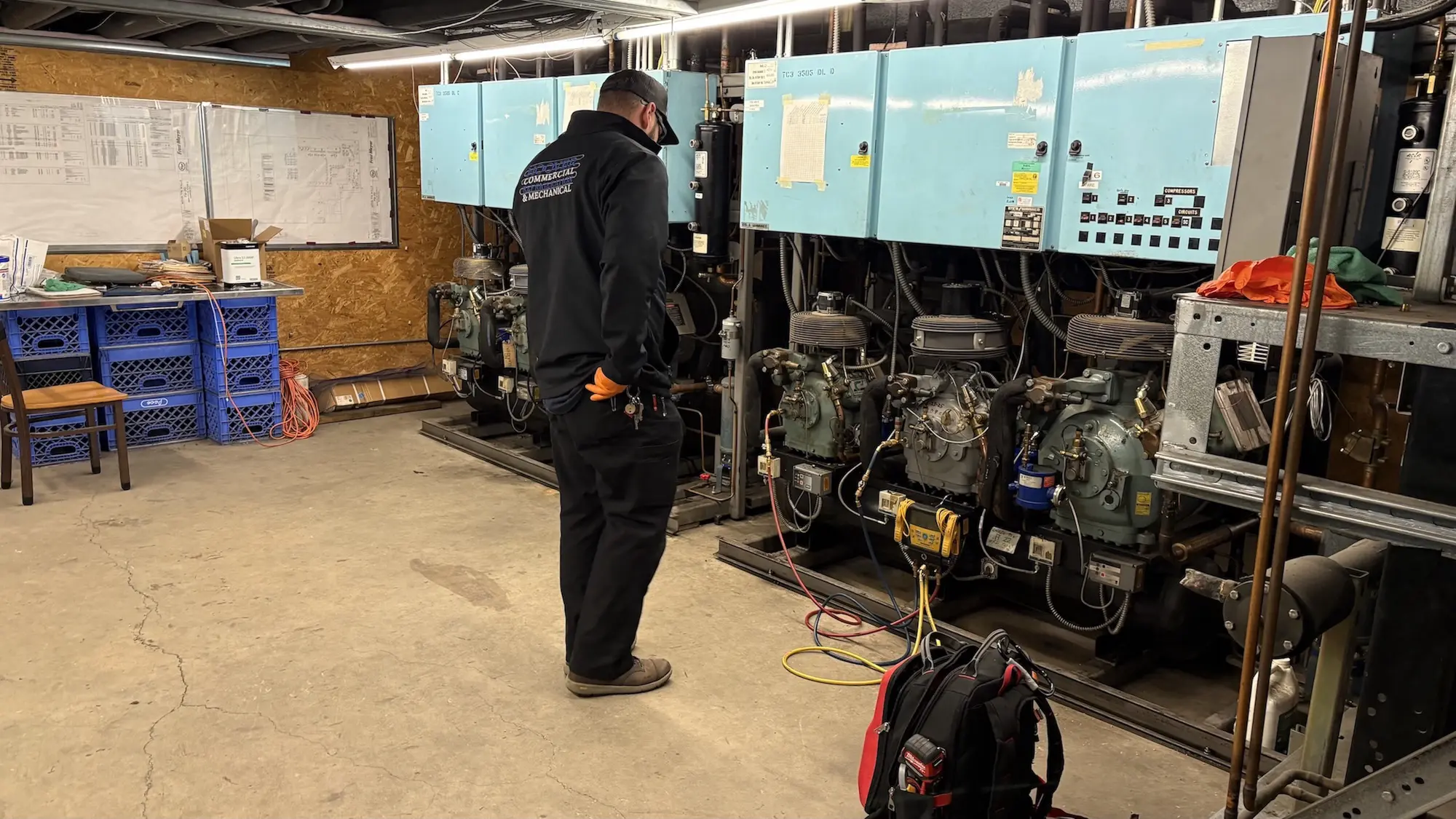
We have been in the cooler. We know what is at stake.
Hoover Commercial started in supermarkets.
That matters because supermarkets do not negotiate with failure. A walk-in freezer that drifts at 3 a.m. is not an inconvenience. It is product loss, an insurance claim, and a conversation with a food-safety auditor. We spent our first years earning trust in one of the highest-stakes refrigeration environments in commercial facilities. Everything since has been built on that foundation.
Founded in Mount Vernon in 2011, Hoover Commercial supports facilities across Western Washington with one promise: show up fast, document everything, and tell you the truth.
HVAC + Refridgeration
Local Response
Documented PM
Compliance-Aware
What Makes Hoover Commercial Different?
Hoover combines commercial HVAC and commercial refrigeration under one service relationship, backed by local Western Washington response, documented preventive maintenance, and compliance-aware planning. For the customer, that means fewer handoffs, clearer accountability, and one team that understands how the building’s systems affect the operation.
The Contractor Most Facilities Teams Never Find Until They Need One
Property managers call after the 2 a.m. repair that consumed the maintenance budget. Plant managers call after an audit surfaces refrigerant records that do not exist. Cold-storage operators call when a temperature alarm turns the next hour into a product-risk decision.
We would rather meet you before any of that happens.
The people we work with carry different titles, but the weight is the same. They are responsible for systems they cannot afford to let fail. They need answers ownership can understand, records an auditor can use, and a contractor who knows the difference between comfort equipment and production-critical equipment.
That is the problem Hoover was built to help them solve.
One Contractor. Two Critical Disciplines.
Most mechanical contractors pick a lane. HVAC or refrigeration. Commercial comfort or process cooling. Emergency response or planned maintenance.
Facilities do not work that way.
A property portfolio does not separate air-handling units from refrigeration cases because two different vendors do. A food-processing plant does not care which trade name applies when a production room overheats and a glycol loop is drifting at the same time. When two contractors share a building and something goes wrong, the first conversation is often about who owns the problem.
The customer should not have to referee that conversation.
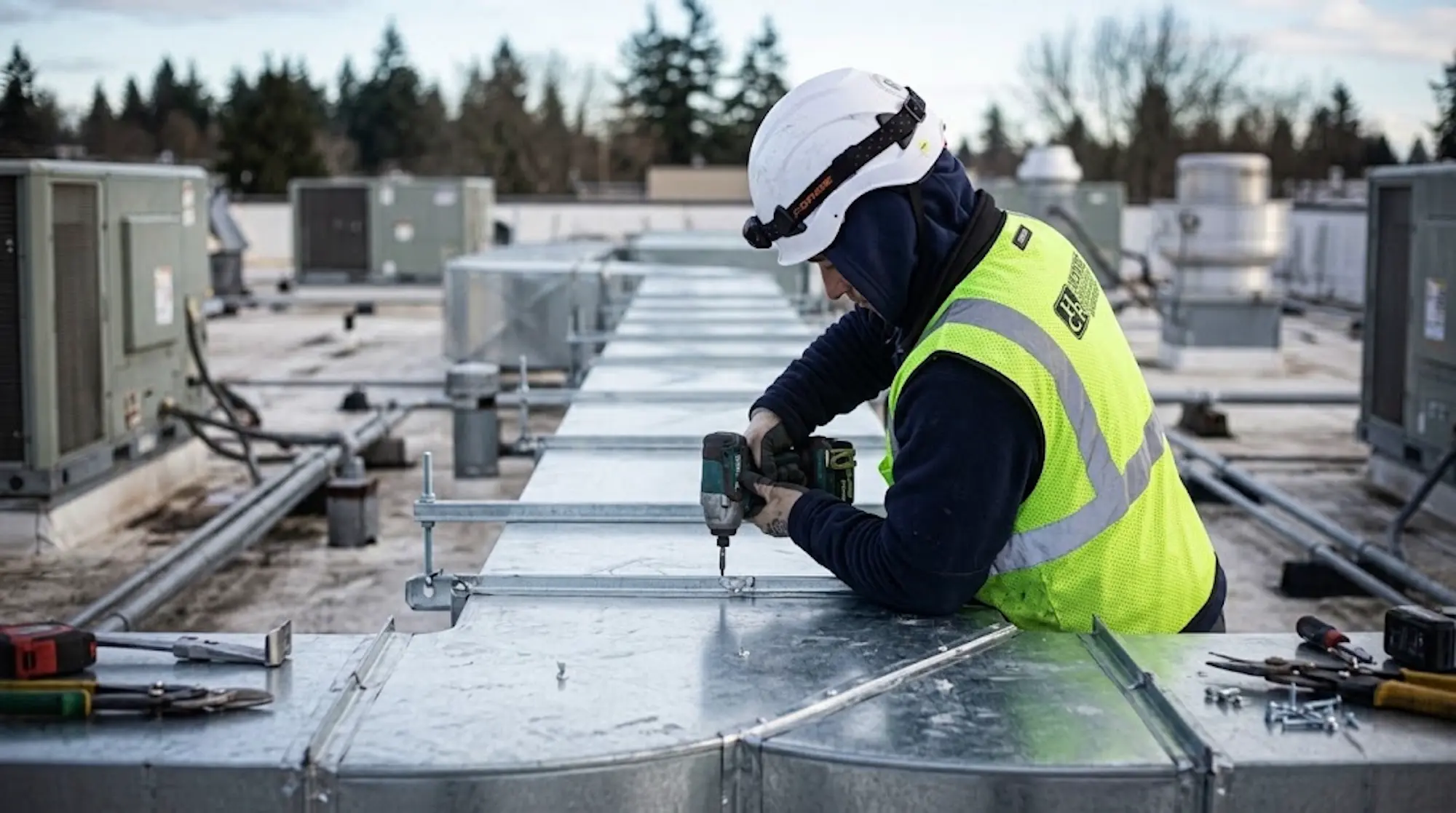
Hoover holds both disciplines under one operating model: one service relationship, one point of contact, one dispatch path, one documentation standard, and one team learning the site over time.
That matters before the emergency, too. HVAC findings can affect refrigeration load. Refrigeration heat rejection can affect the surrounding mechanical environment. Controls, ventilation, process schedules, tenant needs, product temperatures, and energy performance do not stay in separate boxes just because the service contracts do.
One agreement. One accountable partner.
Who Does Hoover Commercial Serve?
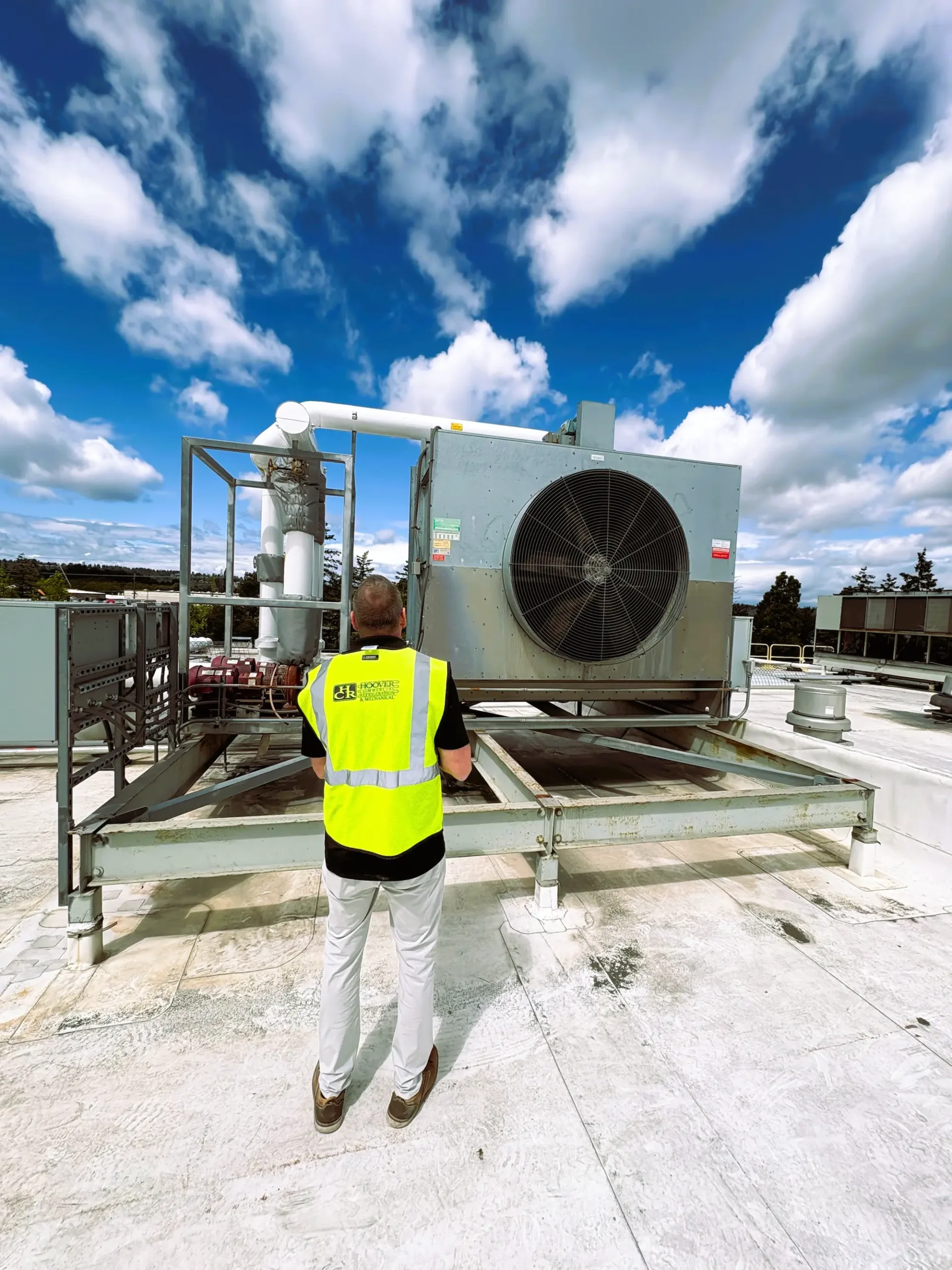
Hoover serves commercial real estate, retail grocery chains, food processing and cold storage, manufacturing and aerospace, and institutional facilities across Western Washington. The Hoover service model is designed for decision-makers who need uptime, documented maintenance, predictable planning, and fast help when failure carries a business consequence.
Founded in Mount Vernon. Built for Western Washington.
Hoover Commercial was founded in Mount Vernon in 2011 by Steve Hoover. The company grew from supermarket refrigeration into a broader commercial HVAC and refrigeration partner without abandoning the operating discipline grocery demanded: urgency when temperature moves, documentation when refrigerant moves, and direct communication when the customer needs the truth. That is why at most chain grocers in the PNW they say “just call Hoover”. We have been honored to be there for our clients when its the summer and the beer and ice cream both need to cold.
The work has expanded. The standard has not.
Documentation Is Not Paperwork. It Is Protection.
The facilities teams we respect most have one thing in common: their records hold up.
When ownership asks why a capital request is justified, the condition is documented. When a new facilities manager inherits the building, the service history exists. When an inspector asks about refrigerant activity or maintenance cadence, the answer is not somewhere in a former vendor’s inbox.
A professional service report should tell you what was checked, what was found, what was completed, and what should be watched next. It should identify the technician, the date, the readings, the abnormal conditions, the work performed, and the forward-looking recommendation.
The report is not the paperwork after the job. The report is part of the job.
Getting Started Takes Three Steps. That Is All.
1. Walk the building.
A journeyman documents the equipment, operating concerns, maintenance history, access, and visible risk. You get a clearer mechanical picture.
2. Get the plan and the number.
You receive priorities, a defined scope, and budget visibility. No vague assessment. No mystery next step.
3. Stop thinking about it.
The program moves forward on schedule. Findings are documented. Recommendations are explained. Emergency support has a known path.
What We Built It Around
2011
Founded
Mount Vernon base. Supermarket discipline
Then
Expanded
Commercial HVAC joined refrigeration under one relationship
Now
Documented
PM, reporting, emergency response, and compliance-aware planning
Always
The Standard
Show up. Write it down. Tell the truth
What We Believe
- The customer should understand the condition before being asked to approve the solution.
- A maintenance visit should produce evidence, not just a completed ticket.
- Local response matters most when the building cannot wait.
- A contractor should teach the customer how to evaluate the work.
- Facilities should support the operation, not repeatedly interrupt it.
The Industries That Depend on Us
Different facilities have different definitions of failure. Hoover’s role is to understand the consequence first, then build the service around it.
Commercial Real Estate and Property Management
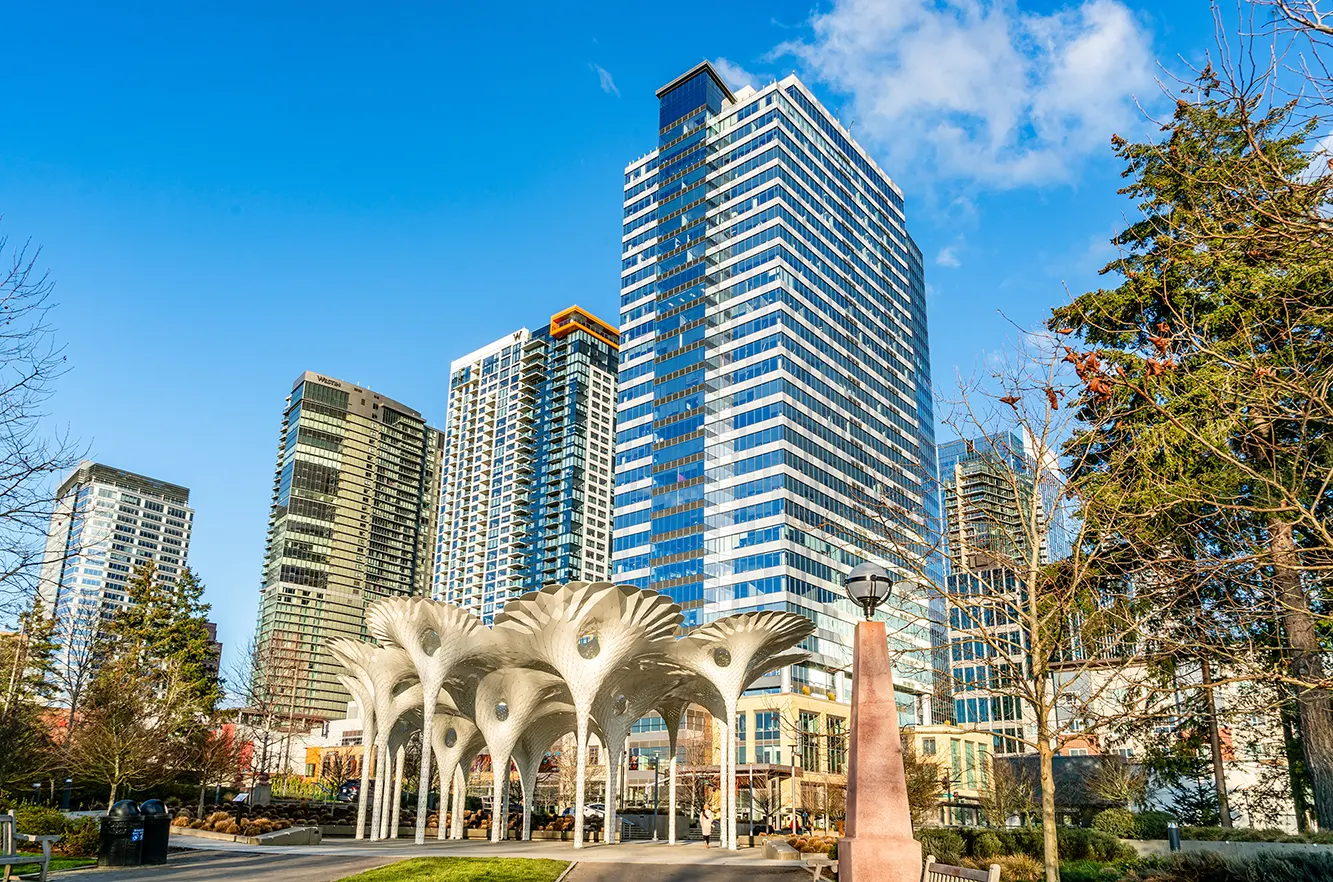
Your tenants have options. Comfort complaints, slow response, weak records, and surprise capital needs eventually become ownership conversations. You need a partner who helps the building perform in the field and on paper.
Retail Grocery Chains + Supermarkets
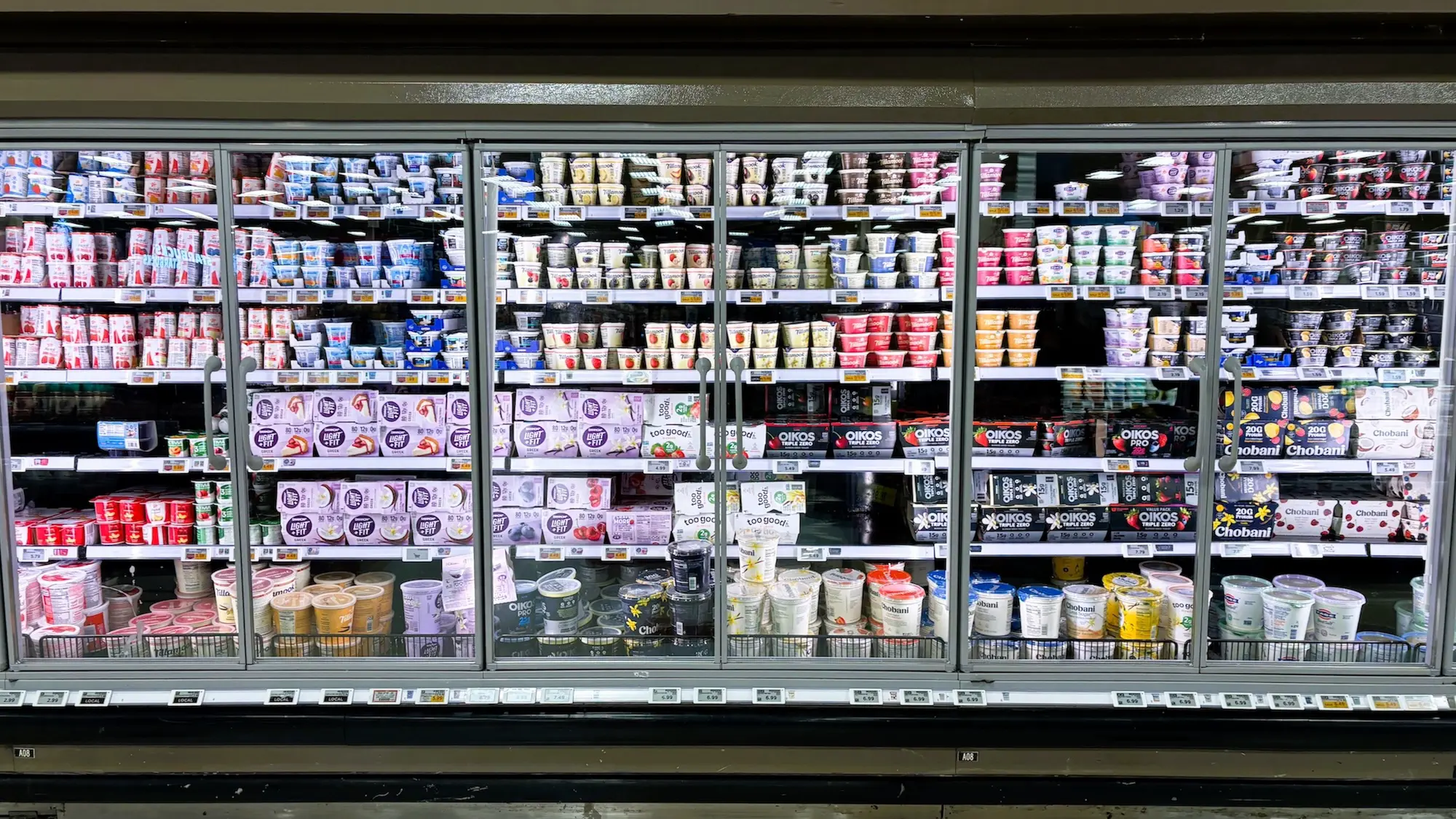
Temperature control protects product, production schedules, and audit readiness. You need technicians who understand that a refrigeration alarm is an operational event, not merely an equipment ticket.
Manufacturing and Aerospace
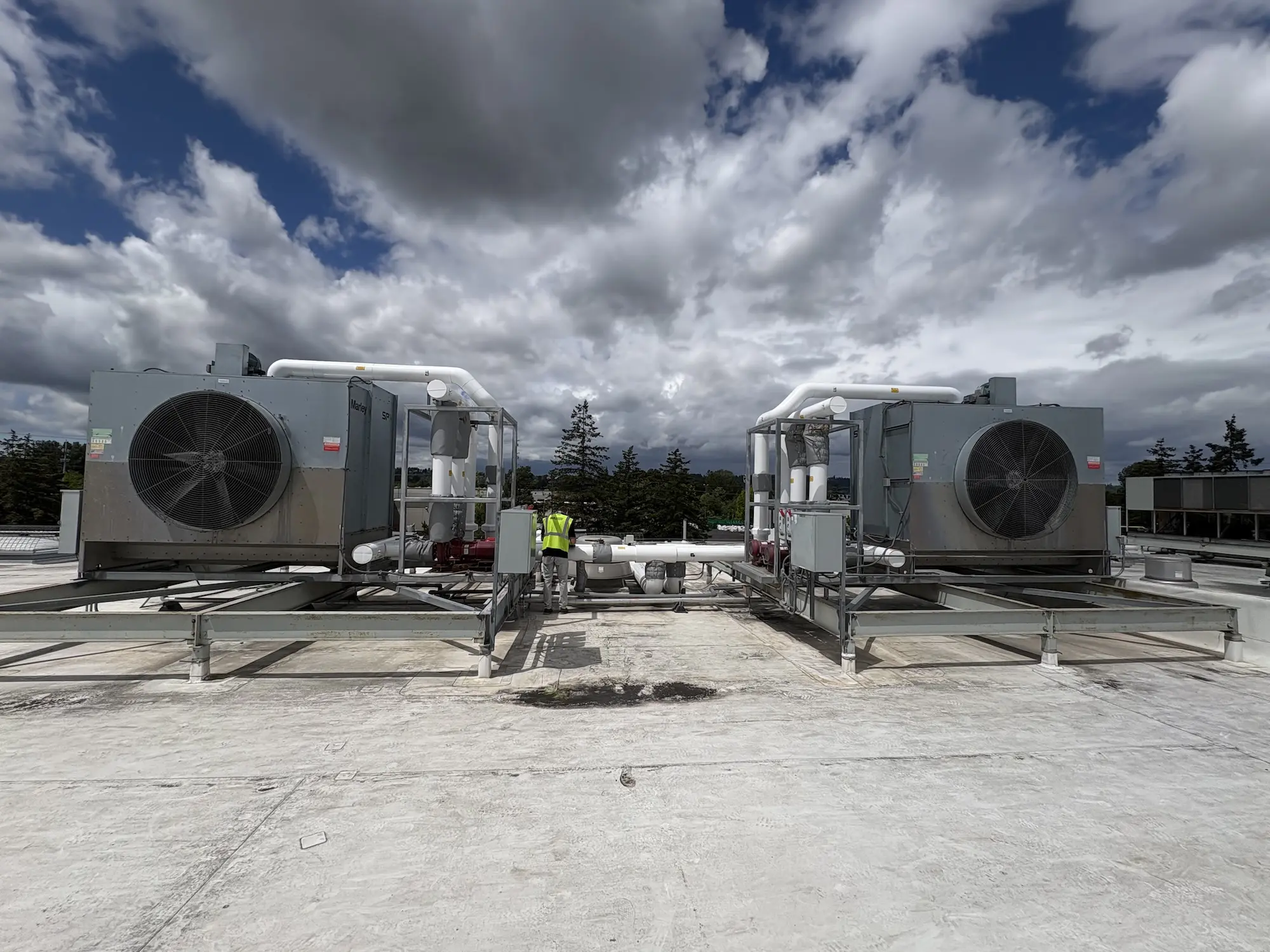
Process cooling and environmental control fail on the production clock. You need maintenance coordinated around operations and response that is close enough to change the outcome.
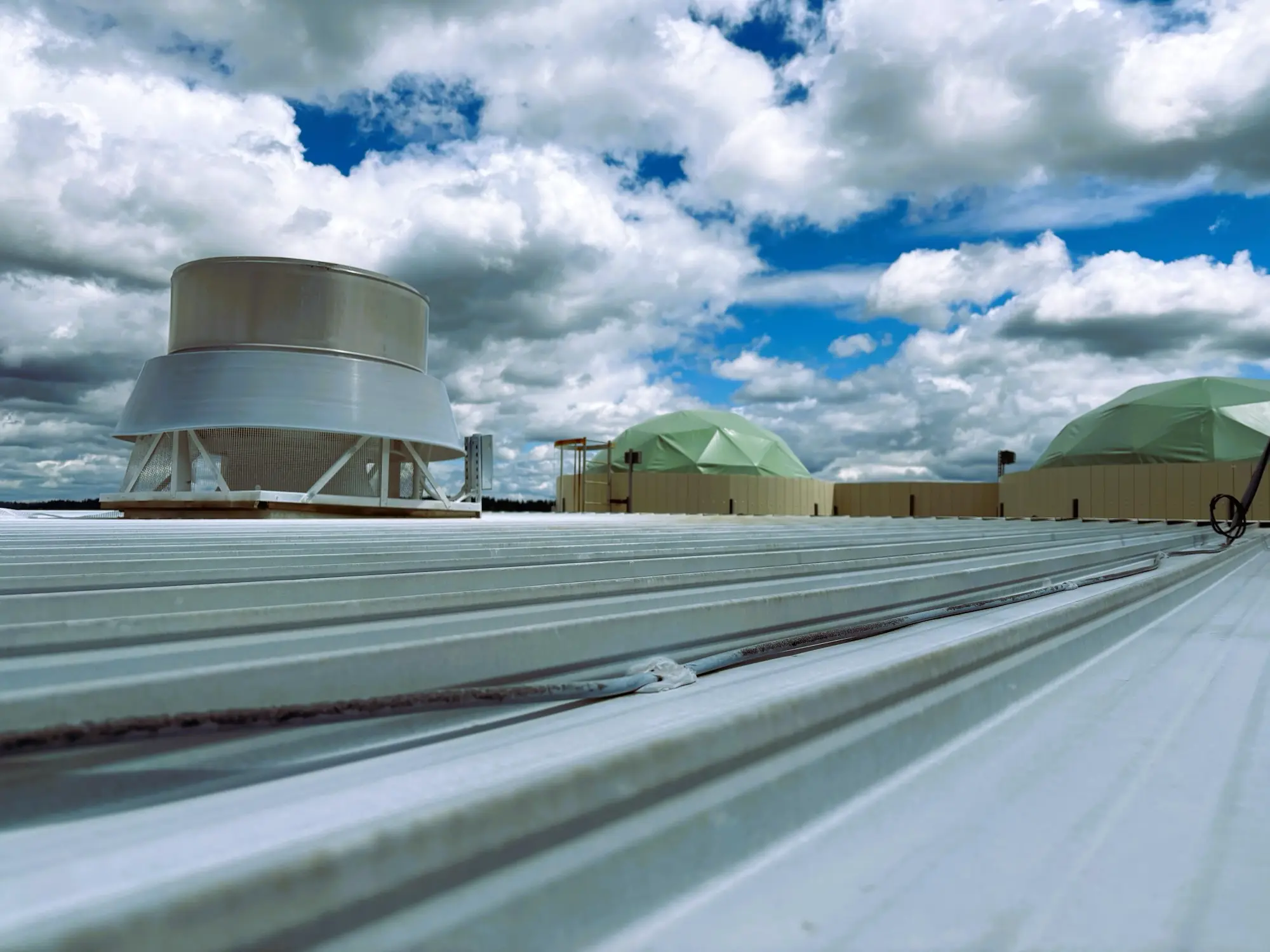
Institutional Facilities + Private Schools
Schools, healthcare sites, and municipal buildings need records that survive budget reviews, leadership transitions, inspections, and long capital-planning cycles.
Compliance Is Becoming an Operating Discipline.
Washington building owners and facility teams are being asked for more than functioning equipment. They are being asked for benchmarking, Energy Management Plans, Operations and Maintenance documentation, refrigerant records, ventilation evidence, and a clearer explanation of how building systems are being managed.
Hoover does not replace the benchmarking professional, filing specialist, engineer, attorney, or tax advisor. Hoover’s role is the mechanical layer underneath those conversations: equipment condition, maintenance cadence, system readings, repairs, refrigerant activity, and service history that can be produced when the customer needs it.
That is where compliance stops being a future project and becomes part of the way the building is operated every month.
Founded in 2011. Built in Mount Vernon. Proven in refrigeration environments where failure becomes product loss, then expanded to the commercial HVAC systems that keep buildings, people, and operations moving.
The buildings change. The standard does not.
One partner. One agreement. One number to call at 8 a.m. or 2 a.m.
Your Building Deserves a Partner Who Understands What Failure Costs You.
Request a complimentary facility assessment and find out what the equipment, records, and operating history are telling you before the building chooses the timing.