
Optimize Indoor Air Quality with Demand-Controlled Ventilation
Sometimes the Problem Isn't the Temperature. It's the Air.
Have you ever been in a meeting where the thermostat hasn't changed, but after 30-40 minutes people start losing focus?
Someone grabs another coffee. Someone starts fidgeting. The room feels stuffy. Everyone assumes the temperature is wrong.
So they adjust the thermostat.
But the problem may not be the temperature at all.
As we gather in conference rooms, offices, classrooms, and common areas, carbon dioxide (CO₂) levels can rise when ventilation doesn't keep pace with occupancy. The U.S. Department of Energy identifies CO₂ monitoring as a common method used to support demand-controlled ventilation strategies and improve ventilation based on actual occupancy.
Because better buildings start with better air.
What Is Demand-Controlled Ventilation?
Demand-Controlled Ventilation (DCV) is an HVAC control strategy that adjusts the amount of outdoor air delivered to a building based on occupancy and ventilation demand.
Many systems use CO₂ sensors as a proxy for occupancy. As more people enter a space, CO₂ levels increase. The HVAC system responds by adjusting outdoor airflow to better match actual conditions.
The goal is simple:
- Support healthy indoor environments
- Improve occupant comfort
- Avoid unnecessary over-ventilation
- Reduce energy used to heat and cool outside air
According to the U.S. Department of Energy, many buildings are ventilated well beyond actual occupancy requirements, creating unnecessary heating and cooling loads.
Source: https://www.energy.gov/cmei/buildings/articles/ultra-low-swap-co2-sensing-demand-control-ventilation
Related Reading
How DCV Works
Occupancy Changes
CO₂ Levels Change
HVAC Controls Respond
Ventilation Adjusts Automatically
Why Building Owners Are Paying More Attention to Ventilation
A room can be at the correct temperature and still feel uncomfortable when ventilation does not keep pace with occupancy.
That's why ventilation has become an increasingly important conversation for:
- Commercial office buildings
- Medical buildings
- Schools
- Multi-tenant properties
- Government facilities
- Conference and training environments
The American Society of Heating, Refrigerating and Air-Conditioning Engineers (ASHRAE) notes that CO₂-based demand-controlled ventilation has become a widely adopted approach for matching ventilation rates to occupancy levels while supporting building efficiency.
Smart Ventilation Still Depends on Reliable HVAC Equipment
Many conversations about DCV focus on sensors and controls.
But controls are only one piece of the equation.
Demand-controlled ventilation may depend on:
- Outdoor air dampers
- Economizers
- Rooftop units
- Supply and exhaust fans
- Variable frequency drives
- Control sequences
- Building automation systems
- CO₂ sensors
If these components are not functioning properly, ventilation performance can suffer regardless of the control strategy.
Before implementing more technology, building owners should understand the condition of the HVAC equipment already serving the building.
Related Reading
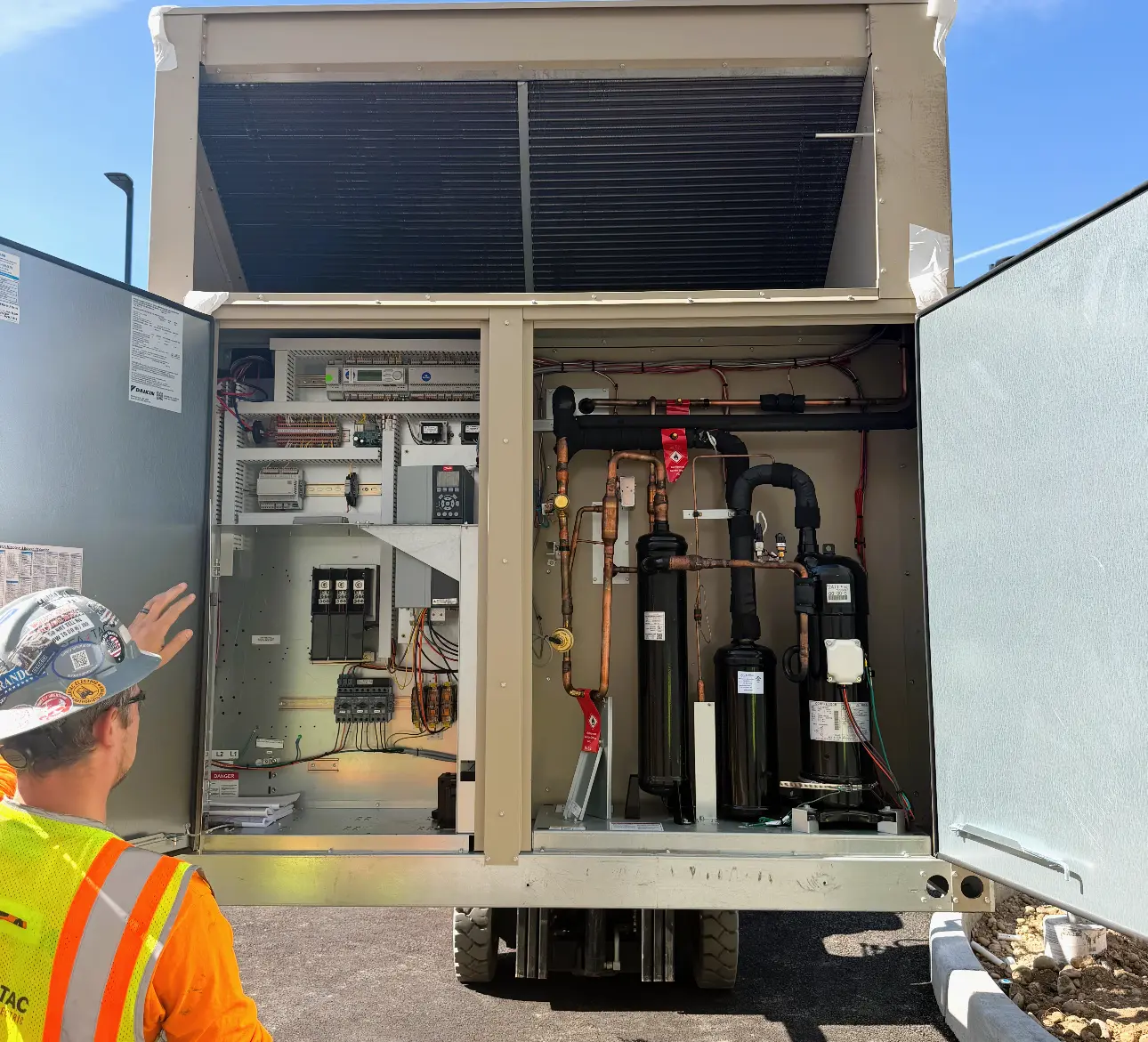
Is Your Building Ventilating the Way You Think It Is?
You may benefit from an HVAC assessment if you experience:
- Stuffy conference rooms
- Occupant comfort complaints
- Persistent hot and cold calls
- Rising utility costs
- Indoor air quality concerns
- Aging rooftop equipment
- Economizers that have not been inspected in years
These symptoms do not automatically indicate a demand-controlled ventilation problem.
But they often indicate the ventilation strategy deserves a closer look.
Demand-Controlled Ventilation and Washington Commercial Buildings
DCV is not simply an energy-efficiency strategy.
In Washington State, DCV is required in certain commercial applications based on occupancy density, outdoor-air requirements, and HVAC system design. The code also requires qualifying systems to automatically adjust outdoor-air delivery based on CO₂ sensor inputs.
Washington Administrative Code:
https://app.leg.wa.gov/WAC/default.aspx?cite=51-11C-40371
2021 Washington Commercial Energy Code:
https://codes.iccsafe.org/s/WAECC2021P1/chapter-4-ce-commercial-energy-efficiency/WAECC2021P1-CE-Ch04-SecC403.7.1.1
For property owners planning tenant improvements, HVAC upgrades, or long-term capital improvements, understanding how ventilation fits into the overall building strategy can help support future decisions.
Related Reading
Start With The HVAC System You Already Have
Your best ventilation strategies begin with a well maintained HVAC system.
Before investing in additional controls, building owners and representatives should understand:
- How ventilation is currently being delivered
- Whether outdoor air components are functioning correctly
- If rooftop units are operating efficiently
- Whether airflow matches building use
- What opportunities may exist for improvement
Whether you're concerned about occupant comfort, indoor air quality, or energy performance, understanding the HVAC system you already own is often the smartest first step.
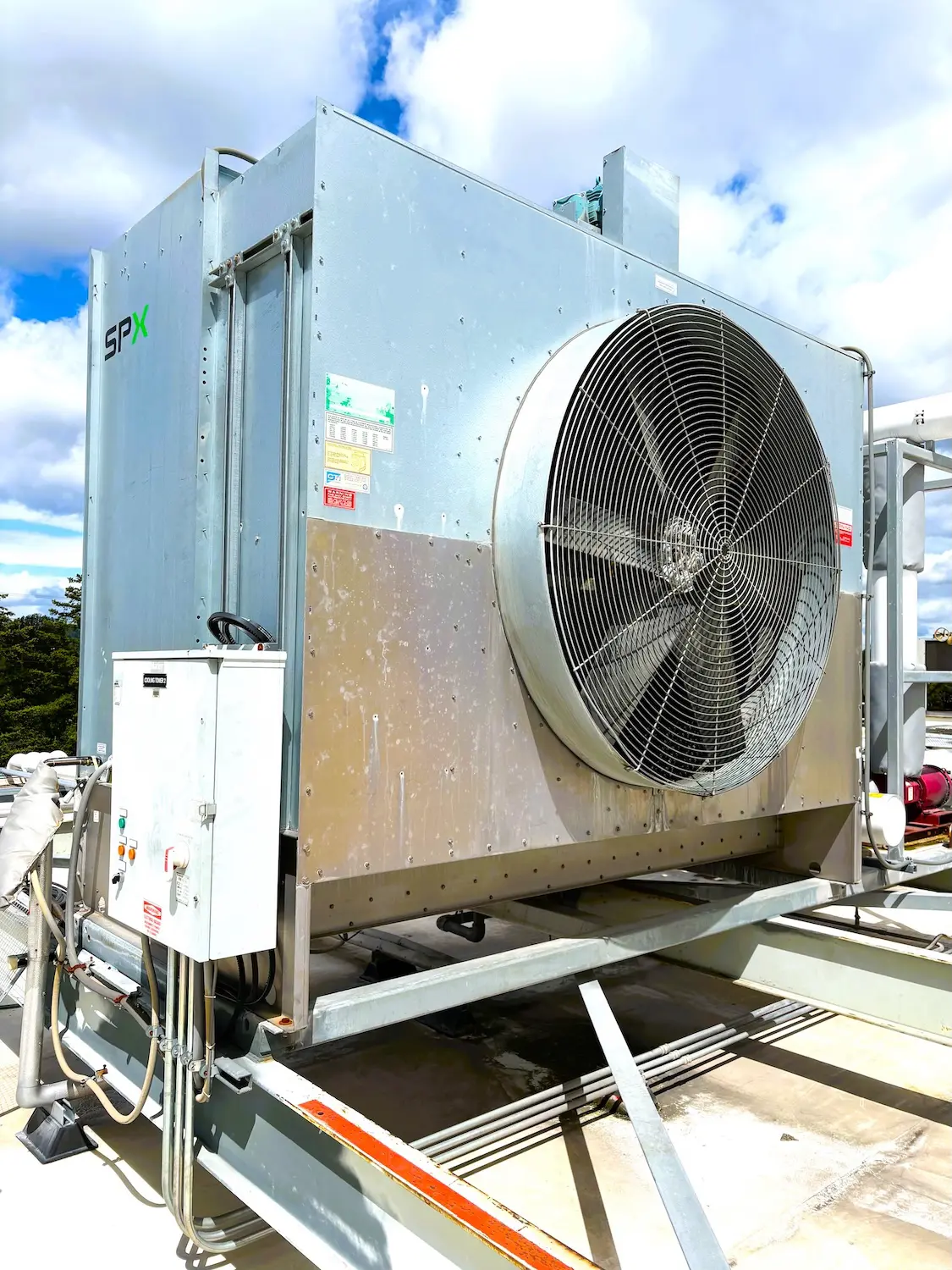
Ready To Better Understand Your Building's Ventilation?
Government & Standards References
U.S. Department of Energy (DOE)
Demand Control Ventilation Overview
https://www.energy.gov/cmei/buildings/articles/ultra-low-swap-co2-sensing-demand-control-ventilation
Washington State Energy Code
Demand Control Ventilation Requirements
https://app.leg.wa.gov/WAC/default.aspx?cite=51-11C-40371
Commercial Energy Code Provisions
https://codes.iccsafe.org/s/WAECC2021P1/chapter-4-ce-commercial-energy-efficiency/WAECC2021P1-CE-Ch04-SecC403.7.1.1
ASHRAE
CO₂-Based Demand-Controlled Ventilation
https://www.ashrae.org/news/ashraejournal/analyzing-co2-based-dcv-for-multiple-zone-vav-systems-with-multiple-recirculation-paths
FAQ
What is Demand-Controlled Ventilation (DCV)?
Demand-controlled ventilation is a strategy that adjusts ventilation dynamically based on occupancy. It utilizes carbon dioxide (CO₂) concentrations as a proxy for human occupancy, allowing the system to tune the ventilation with respect to occupant levels so that indoor CO₂ stays less than 700 ppm above outdoor air concentrations.
How much energy can DCV save for a commercial building?
The U.S. Department of Energy notes that DCV can achieve an average of 17.8% energy savings across all U.S. climate zones compared to simple occupancy sensing. For more complex setups, applying DCV control logic to multiple-zone variable air volume (VAV) systems can result in 7% to 21% HVAC source energy savings.
Is Demand-Controlled Ventilation required in Washington State?
Yes, Washington State requires DCV for spaces with single-zone systems where an air economizer is provided. It is also required for spaces with an occupant load of 15 or more people per 1,000 square feet, or an occupant outdoor airflow rate of at least 15 cfm per person.
How do CO₂ sensors communicate with the HVAC system?
Code requires that qualifying equipment must be configured to automatically change the quantity of supplied outdoor air based upon the output of a CO₂ sensor. System outdoor air intake adjusts from peak design levels in response to changes in the space, which is typically accomplished through variable speed fan control.
Are any commercial spaces exempt from Washington's DCV requirements?
Yes, there are several exemptions, including dining areas where more than 75% of the space's design outdoor airflow is transfer air required for an adjacent commercial kitchen. Other exempt occupancies include correctional cells, educational laboratories, salons, bowling alleys, and dormitory sleeping areas with fewer than five occupants. Systems with total supply air less than 1500 cfm are also permitted to use other means of adjusting outdoor air.
Can DCV be applied to multiple-zone HVAC systems?
While original CO₂-based DCV was only applicable to single-zone mechanical systems, the technology has expanded. Code-compliant DCV control sequences have now been developed for multiple-zone variable air volume (VAV) systems with multiple recirculation paths.