
Your Building Has a Deadline.
Let’s Make Sure You’re Ready for It.
We're going to walk you through this together. No jargon spiral. No regulation lecture. Just the stuff you actually need to know — and what we can help with when it matters.
Here is the short version: Washington State passed a law that says commercial buildings must hit energy performance targets. That means measuring your building, writing a plan, and showing that your systems are being maintained properly. Miss the deadline? Penalties. Get ahead of it? There is real incentive money on the table.
We will explain every piece of this —hopefully in the simple language — so by the time you finish reading you know exactly where your building stands and what the next step is.
This page reflects WA Department of Commerce CBPS requirements as of October 2026. For legal determinations specific to your building, consult Commerce or legal counsel.
The Washington Clean Buildings Performance Standard
Think of CBPS like a building fitness test — except it’s mandatory, it has a deadline, and there’s a proctor. The state wants to know: how much energy is your building using? Is it improving? And is someone actually maintaining the systems that make that possible?
Created by HB 1257 in 2019 and expanded by SB 5722 in 2022, CBPS applies to commercial buildings in Washington State based on size. The bigger the building, the earlier the deadline.
The law has three moving parts — and all three matter.
1
Measure It — Benchmarking
Every year, your building's energy-use intensity (EUI) gets submitted through ENERGY STAR Portfolio Manager. Think of this as your building's report card. The state sees how you compare to similar buildings nationally. Our partner, Vert Energy Group, handles the benchmarking for you.
2
Plan It — Energy Management Plan (EMP)
A written plan that shows your building's path to hitting its energy target. This is typically done with an energy consultant. Our partner, Vert Energy Group, develops the plan — working from the equipment record and O&M documentation we keep.
3
Prove It — Operations & Maintenance Program
This is where your mechanical contractor becomes part of your compliance story. The O&M program is the ongoing record that your systems are actually being maintained — not just visited. This is Hoover's lane.
Here's the key insight most people miss:
Parts 1 and 2 are mostly about paperwork and reporting. Part 3 is about what actually happens to your building — service visit by service visit, year after year. You need a mechanical contractor who produces documentation, not just invoices.
Your Building's Deadline Calendar
The deadlines are staggered by building size. Find your building’s square footage in the table below. The date next to it is what matters to you right now.
The thing that catches people off guard:
Tier 1 compliance requires your Energy Management Plan AND your O&M program to be running 12 months BEFORE your deadline — not on it.
If your building is in the 90,001–220,000 sq ft band, that program should already be active right now.
The deadline on paper is not the date you need to be ready. The real date is one year earlier.
What Happens If You're Ready — and What Happens If You're Not
Good news first: there’s real money for getting ahead of this.
Bad news: the penalties for missing it are not a slap on the wrist. Here’s both sides of the equation.
- If You Miss the Deadline (Tier 1)
$5,000 base penalty
PLUS $1.00–$1.50 per square foot, annually
If your building is in Seattle: the city's BEEPs standard STACKS ON TOP
Combined Seattle exposure can exceed $20,000 + $4.50/sq ft
These are the published numbers from WA Department of Commerce — not estimates.
+ If You Move Early (Early Adopter Program)
Up to $2.00 per sq ft — Tier 1 buildings
Up to $0.30 per sq ft — Tier 2 buildings
$75 million fund — first come, first served
The fund does not wait for your deadline. It rewards buildings that move before it.
Source: WA Department of Commerce Early Adopter Incentive Program.
Let's do the math on a 100,000 sq ft Tier 1 building:
X Out of compliance: $105,000–$155,000 in annual penalties. If in Seattle: could exceed $470,000.
✓ Early Adopter Incentive: up to $200,000 back — from the same state fund.
The penalty and the incentive are both real numbers. The only difference is timing.
BEEPs — Seattle's Building Emissions Standard
If your portfolio includes Seattle buildings, you have two overlapping standards to track — CBPS from the state and BEEPs from the city. They measure different things, but both flow through the same mechanical contractor work.
CBPS (Washington State)
Measures: energy use intensity (EUI)
Unit: kBtu per sq ft per year
Applies to: all WA commercial buildings over 20,000 sq ft
Governed by: WA Dept. of Commerce
Hoover's connection: HVAC maintenance directly reduces energy use and EUI
BEEPs (Seattle Only)
Measures: carbon emissions intensity
Unit: kg CO₂e per sq ft
Applies to: commercial buildings in Seattle — stacks on CBPS
Governed by: Seattle Office of Sustainability & Environment
Hoover's connection: calibrated equipment and refrigerant management reduce carbon output
The good news: the O&M mechanical work that helps one standard tends to help the other. Tuned controls, clean coils, calibrated economizers, and documented refrigerant tracking all reduce both energy intensity and carbon output.
One O&M program. Two compliance requirements. Same maintenance visits.
What Hoover Does — And Who Handles the Rest
We want to be honest with you about exactly where our lane is — and just as clear that you shouldn’t have to go find the rest on your own. We’ve partnered with Vert Energy Group, a Washington clean-buildings compliance firm, so the mechanical record and the filing come from two teams working from the same building data.
What Hoover provides:
- Preventive maintenance visits with written findings reports — every single visit
- Complete equipment inventories: make, model, serial, refrigerant, age, condition
- EPA 608-compliant refrigerant tracking and documentation
- A service history record you can produce on request — not reconstruct from memory
- 24/7 emergency response when equipment failure becomes a compliance risk event
- A single point of contact who knows your buildings before the call comes in
What Vert Energy Group handles with us:
- ENERGY STAR Portfolio Manager benchmarking, utility data management, and your energy-use target
- Energy Management Plan development and filing, built around the O&M record we keep
- Commerce portal and filing support — Commerce remains the final word on whether your building is covered
- Early Adopter Incentive applications — so available funding doesn’t go unclaimed
You don’t need to hire a benchmarking engineer, energy consultant, or compliance specialist and then introduce them to your mechanical contractor. Vert Energy Group is already working with us. We keep the mechanical record clean, current, and documented; they turn it into the filing. Legal and tax questions still belong with your counsel and tax advisor.
The documentation question to ask your current contractor:
"If a WA Commerce auditor asked for three years of O&M records this afternoon — how long would it take you to produce them?"
If the answer is "I'm not sure" or "let me check the invoices," that's the gap.
Hoover produces a written findings report on every visit. That's the record CBPS needs.
The compliance obligation is yours. The mechanical record that supports it is ours, and the filing is prepared with our partner, Vert Energy Group.
How to Start. Three Steps.
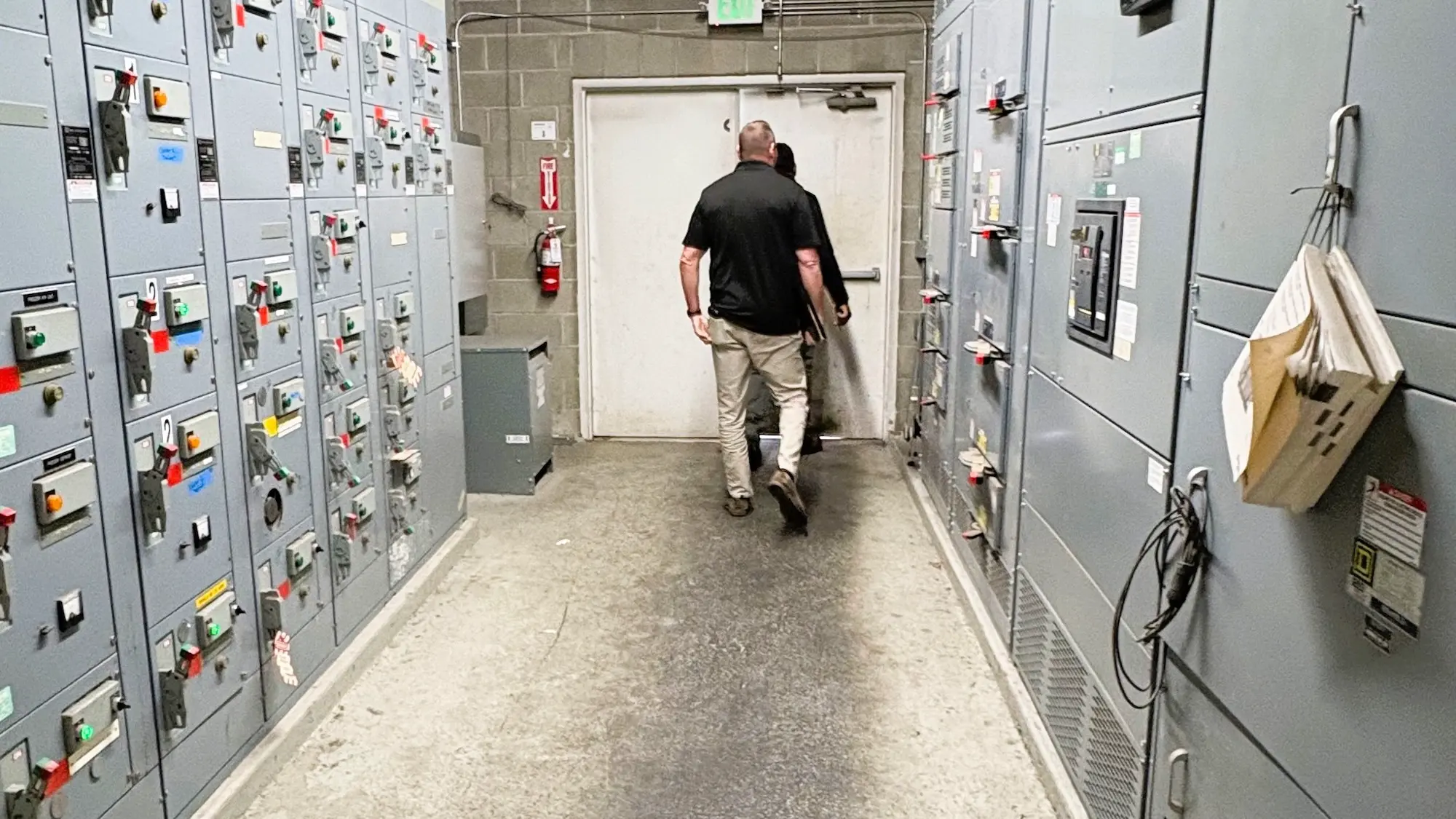
1. Walk the building
A journeyman documents every unit — model, serial, age, condition, refrigerant. You get a complete mechanical picture, probably for the first time. This is the beginning of the equipment record your O&M program needs.
2. Get the plan and the number
A written PM scope, a service tier, and a price you can put in next year's budget — alongside the compliance calendar your buildings are on. No vague estimates. No surprise invoices.
3. Stop thinking about it.
We show up on schedule, document everything, and answer the phone at 2 a.m. The O&M record builds itself, visit by visit. Your compliance story writes itself along with it.
Straight Answers to the Questions Your Ownership Group Is Already Asking
Does CBPS even apply to my building?
It depends on your square footage. Buildings over 50,000 sq ft fall under Tier 1, with deadlines phased from 2026 through 2028. Buildings between 20,000 and 50,000 sq ft (including multifamily) are Tier 2, with a July 1, 2027 deadline. Under 20,000 sq ft? Not currently covered. The WA Department of Commerce maintains a covered-buildings lookup — that's the authoritative source for your building's exact classification. (commerce.wa.gov/cbps)
My building has a service contractor. Does that count as an O&M program?
Having a HVAC/R contractor is not the same as having a documented O&M program. CBPS reviewers look for evidence: maintenance performed at documented intervals (according to O&M specs), written findings per visit, anomalies tracked, follow-up items recorded. If your current contractor's record is line items on invoices, it may not satisfy what WA Commerce expects. The test: can they hand you a written findings report from every PM visit? If not, that's the gap.
What's the difference between benchmarking and the O&M program?
Benchmarking tells the state how much energy your building uses — submitted annually through ENERGY STAR Portfolio Manager. The O&M program demonstrates that your building is being maintained in a way that makes that performance repeatable (and saves on your building portfolio’s actual energy usage).
Another way to think about it-- Benchmarking is a measurement. The O&M program is the proof that the number isn't a fluke. Both are required. Neither substitutes for the other.
Does BEEPs replace CBPS for Seattle buildings?
No — it stacks on top. CBPS is a state law measuring energy use intensity. BEEPs is a Seattle ordinance measuring carbon emissions intensity. Seattle buildings must satisfy both. The O&M program that supports CBPS compliance also contributes to BEEPs performance — same maintenance visits, both standards benefit.
What actually happens if I miss the deadline? Not great…
Penalties are assessed by WA Commerce and compound annually for ongoing noncompliance. Tier 1: up to $5,000 + $1.00–$1.50/sq ft per year. Seattle BEEPs stacks additional exposure. Buildings that engage with Commerce before a deadline — even late — are typically treated more favorably than those who don't engage at all. The practical advice: start now, even if you're behind. Doing nothing is the most expensive option.
When you were young did your parents ever tell you to clean your room and you kept putting it off? Well eventually you had to clean your room anyway and you got hassled along the way. Building portfolios that wait will miss out on the incentives deal with penalties and still have to find and hire both a contractor and still get compliant with an energy auditor. Get paid to do it or pay to do it is all a matter of when we get started.
You now know more about CBPS than most building operators in Western Washington.
The question is just: does your mechanical record already support what your building needs to file?
One conversation — one site visit — and you'll know exactly where you stand. No pressure. No manufactured urgency. Just clarity.